Dolphin Watching in Lagos
Lagos is one of the best places in the Algarve for dolphin watching, with high sighting rates, year-round tours, and frequent encounters with wild dolphins.
Decide whether you want a dedicated 90-minute wildlife search or a longer Benagil combination. Neither promises a wild sighting.
Last updated: June 24, 2026
Lagos is one of the best dolphin watching bases in the Algarve, with sighting rates above 90% from licensed operators. Common and bottlenose dolphins live in these waters year-round. Tours run 1.5 to 2.5 hours, cost €25-€55 per adult, and depart from Marina de Lagos. The best tours have a marine biologist on board. April through October gives the calmest conditions and highest sighting rates. The main thing to know before you book: these tours head further offshore than the grottos tours, and the open-water ride is rougher. Pick your vessel format carefully if anyone in your group is prone to seasickness.
Quick Facts: Dolphin Watching in Lagos
| Departure point | Marina de Lagos, gate “Passeios de Barco / Boat Trips” |
| Tour duration | 1.5-2.5 hours (dedicated dolphin); 2.5-3 hours (combo with Benagil) |
| Price range | €25-€55 per adult (Prices verified June 23, 2026) |
| Sighting rate | 90-95% with licensed operators in main season |
| Most common species | Common dolphin, bottlenose dolphin |
| Also possible | Striped dolphin, Risso’s dolphin, harbour porpoise, minke whale, orca (rare) |
| Best months | April-October (peak sighting rate and calmest conditions) |
| Year-round tours | Yes, though winter cancellations due to swell are more frequent |
| Marine biologist on board | Available with select Lagos operators (recommended) |
| Minimum age | Typically 3+ (some operators allow younger); not suitable for pregnant women |
| Distance offshore | 5-15 km from coast (further than grottos tours) |
Is Dolphin Watching in Lagos Worth It?
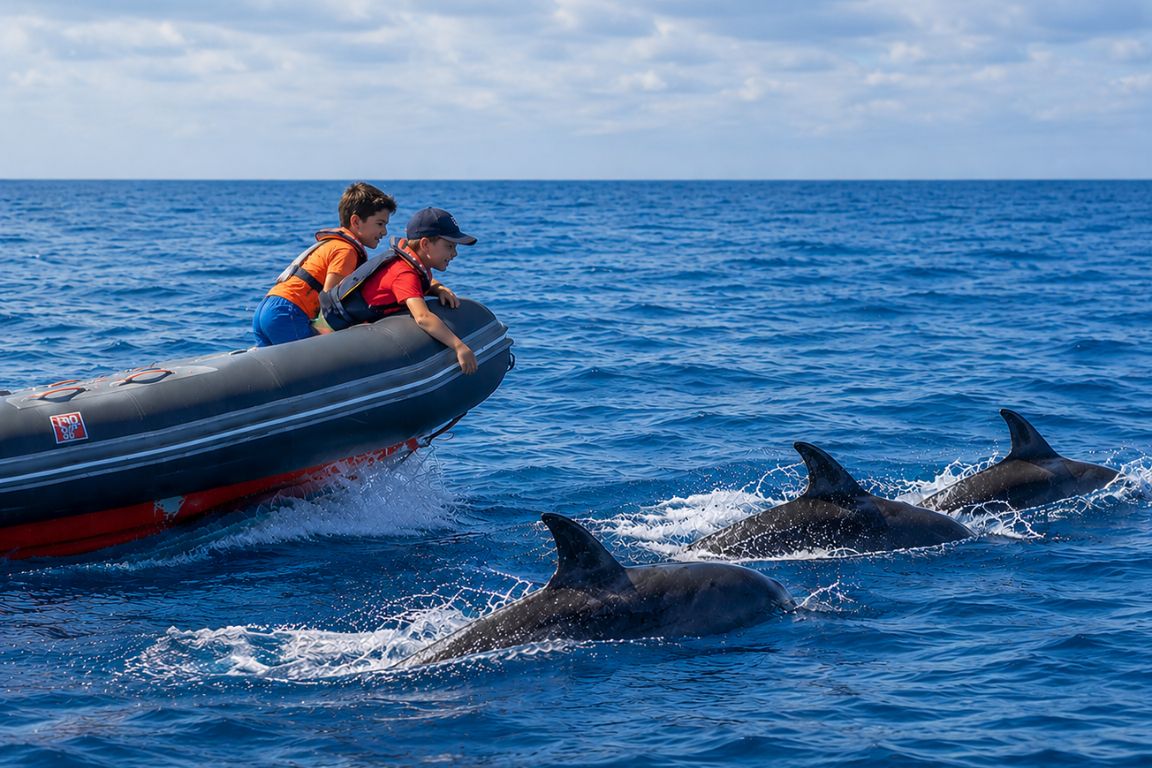 Yes, for most travelers. The Algarve has resident populations of common and bottlenose dolphins year-round, licensed operators report sighting rates above 90% in main season, and a good Lagos dolphin tour with a marine biologist on board is genuinely one of the best wildlife experiences in Southern Europe. The qualifier is the open-water ride: dolphin tours head 5 to 15 km offshore, which is rougher than the cliff-hugging grottos tours, and the difference matters if anyone in your group has motion sensitivity.
The first time a pod of common dolphins decides to bow-ride your boat, the experience doesn’t require any explanation. Thirty animals moving in formation at 20 knots, surfacing in rotation within a meter of the hull, the breath audible over the engine. Some of our travelers who’ve done dozens of wildlife experiences around the world describe this as the closest encounter they’ve had. That’s not unusual feedback. It’s consistent.
What makes the Lagos water good for dolphins is structural, not seasonal luck. The Algarve coast sits at a convergence of Atlantic and Mediterranean-influenced currents that produce nutrient-rich upwelling. This feeds the sardine and mackerel shoals that the dolphins follow. The Portimão Canyon, a deep underwater feature just east of Lagos, creates a gradient between shallow coastal water and deep offshore water that concentrates prey species. Dolphins know this. They’ve been working these waters for longer than anyone has been watching them.
The honest caveat: a small percentage of tours come back without sightings. Weather, sea conditions, and dolphin behavior are all variables outside the guide’s control. The best Lagos operators deal with this transparently, offering a free rebooking or partial refund on the rare occasions the pods don’t show. If an operator doesn’t have this policy, look for one that does before booking.
If you want a marine biologist on board for live species identification, start with the Professional Marine Biologist Dolphin Tour from Lagos.
What Dolphins Can You See in Lagos, Portugal?
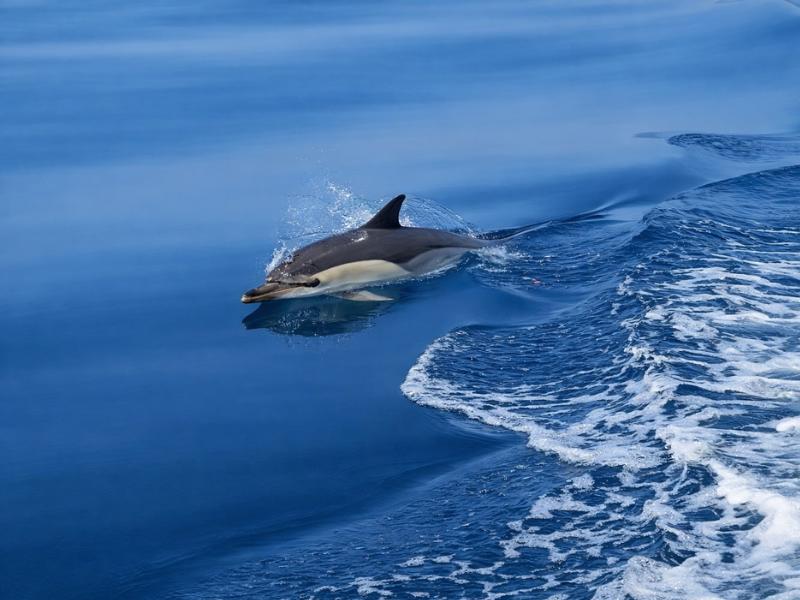
Five cetacean species are regularly seen on Lagos dolphin watching tours: common dolphin, bottlenose dolphin, Risso’s dolphin, striped dolphin, and harbour porpoise. Common and bottlenose dolphins are resident year-round and make up the majority of sightings. Striped and Risso’s dolphins appear less predictably, typically in deeper offshore water. Occasional visitors include minke whales in spring and summer, and orcas passing through the Strait of Gibraltar hunting bluefin tuna.
Each species behaves differently, and knowing what you’re looking at changes the experience considerably. Here’s what distinguishes them:
Common dolphin (Delphinus delphis). The species you’re most likely to encounter. Slim-bodied, with a distinctive yellow-and-grey hourglass pattern on the flanks. They travel in large groups, sometimes numbering 50 or more, and are extremely sociable around boats. Common dolphins actively seek out bow waves and ride them at speed. When a large pod is feeding, the surface breaks in multiple places at once and the sound carries across the water before you see them. A nine-year study of Algarve cetaceans conducted between 2015 and 2023 confirmed common dolphins as the most frequently observed cetacean species in the region.
Bottlenose dolphin (Tursiops truncatus). Larger and more deliberate than common dolphins, with uniform grey coloring and the “Flipper” profile most people recognize. The Algarve has a resident bottlenose population split into two subgroups: inshore animals that feed in shallow coastal waters within 3 miles of shore, and offshore animals that congregate around the Portimão Canyon and often follow commercial trawlers. Bottlenose are less acrobatic than common dolphins but more curious. They approach boats slowly and tend to linger.
Striped dolphin (Stenella coeruleoalba). Fast, sleek, and acrobatic. Recognizable by the dark stripe running from eye to tail. They prefer deeper offshore water and are more reliably seen on longer tours that venture further from the coast. Known for spectacular aerial spins, which are easier to photograph than the burst-and-dive behavior of common dolphins.
Risso’s dolphin (Grampus griseus). The most visually striking species: pale grey to almost white, with heavy scarring from social interactions that accumulates over a lifetime. Adults can look almost completely white at distance. They live in deep water and appear less often than the other species, but sightings on Lagos tours are not rare. Multiple reviews specifically mention the surprise of spotting Risso’s when they expected only common dolphins.
Harbour porpoise (Phocoena phocoena). Small, shy, and easy to miss. They surface briefly, roll without drama, and disappear. Guides who have been watching these waters for years can pick them out from the boat; most passengers miss the first few sightings until the guide points to exactly the right spot.
Bonus encounters. Orcas pass through the Strait of Gibraltar in spring and summer hunting bluefin tuna during their Mediterranean migration. Sightings from Lagos tours are rare but real. Minke whales appear in the western Algarve primarily between May and September. Neither can be promised or predicted, but both have been spotted from Marina de Lagos departures.
When Is the Best Time of Year for Dolphin Watching in Lagos?
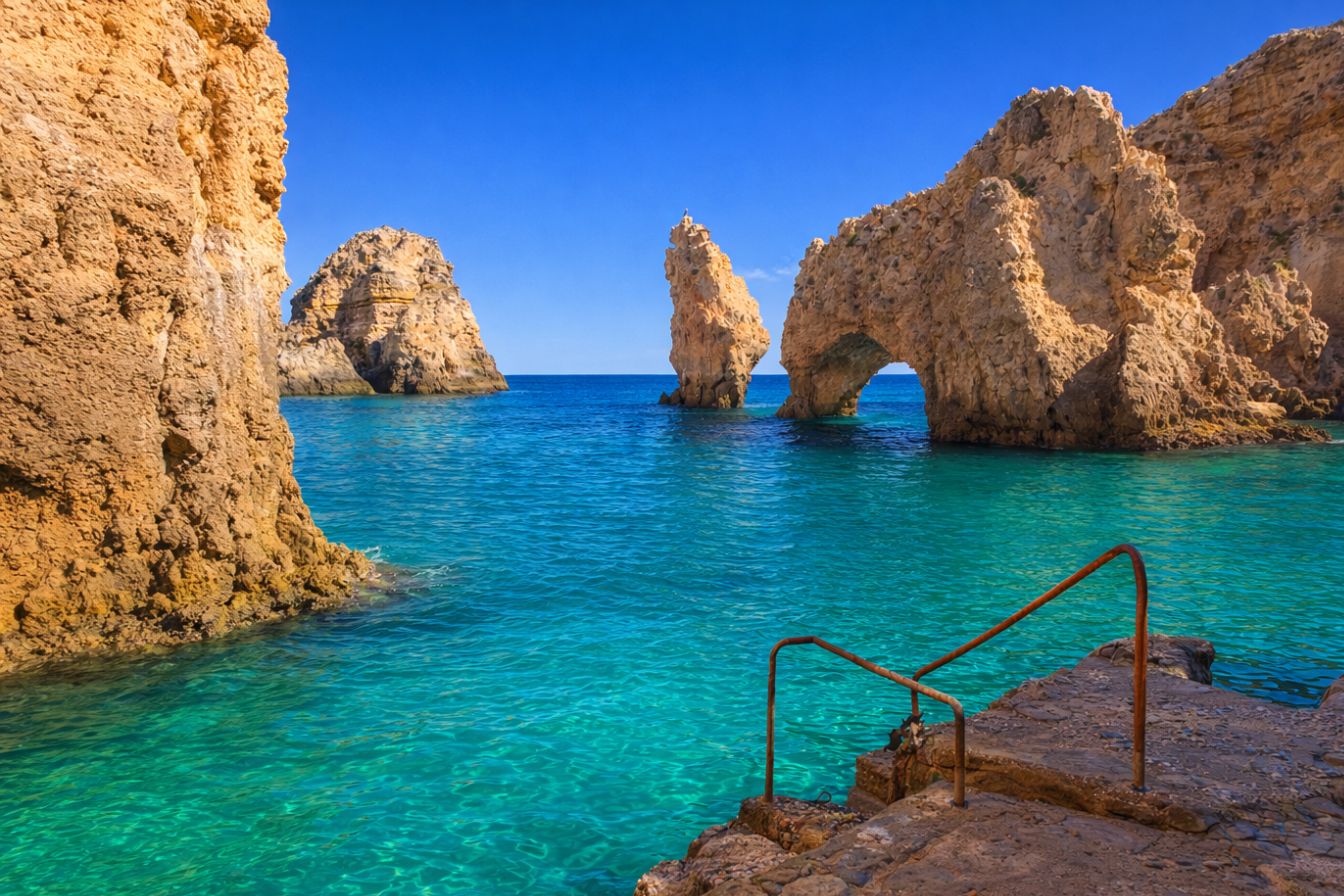 April through October is the best window for dolphin watching in Lagos. Sighting rates peak, sea conditions are most reliable, and the summer influx of migrant common dolphins from the North Atlantic adds to the resident population, producing larger pods than at any other time of year. Morning departures throughout this window give you calmer water and better light for spotting and photographing. Winter tours run but cancellation rates increase significantly from November through March due to Atlantic swell.
The seasonal dynamic in these waters is worth understanding. Both common and bottlenose dolphins live here year-round. But in summer, a migratory population of common dolphins arrives from the colder North Atlantic, mixing with the resident Algarve animals. Warmer water also triggers breeding behavior. Pods with calves are common between June and September, and groups of 30 to 50 or more are not unusual. Guides who have been running these tours for years describe summer as the time when the encounters are most likely to be extended and active.
| January-March | Moderate (70-80%) | Rougher, more cancellations | Resident common and bottlenose |
| April-May | High (85-90%) | Improving, some swell | Common, bottlenose, minke whale possible |
| June-August | Very high (90-95%) | Calm, ideal conditions | Large mixed pods, calves, striped, orca (rare) |
| September-October | Very high (90-95%) | Excellent, fewer crowds | Large pods, Risso’s possible, minke whale |
| November-December | Moderate (70-80%) | Variable, swell increases | Resident species only |
Sighting rates based on licensed operator data. Prices verified June 23, 2026
September and October deserve specific mention. Crowd levels drop after the peak summer season but sighting rates remain very high, water temperatures are still warm, and the pods are still large. Several of our guides privately rate October as their favorite month for dolphin watching on this coast. Calmer conditions, attentive dolphins, and a marina that isn’t running at maximum capacity all day.
Morning vs afternoon also matters more on dolphin tours than on grottos tours. Calmer morning water is easier for spotting dorsal fins and blows at distance. The afternoon north-west wind that builds along the Algarve coast makes open-water spotting harder and the return ride rougher on a RIB. Morning slots fill first for good reason. Book early in the planning process.
What Are the Best Dolphin Watching Tours in Lagos?
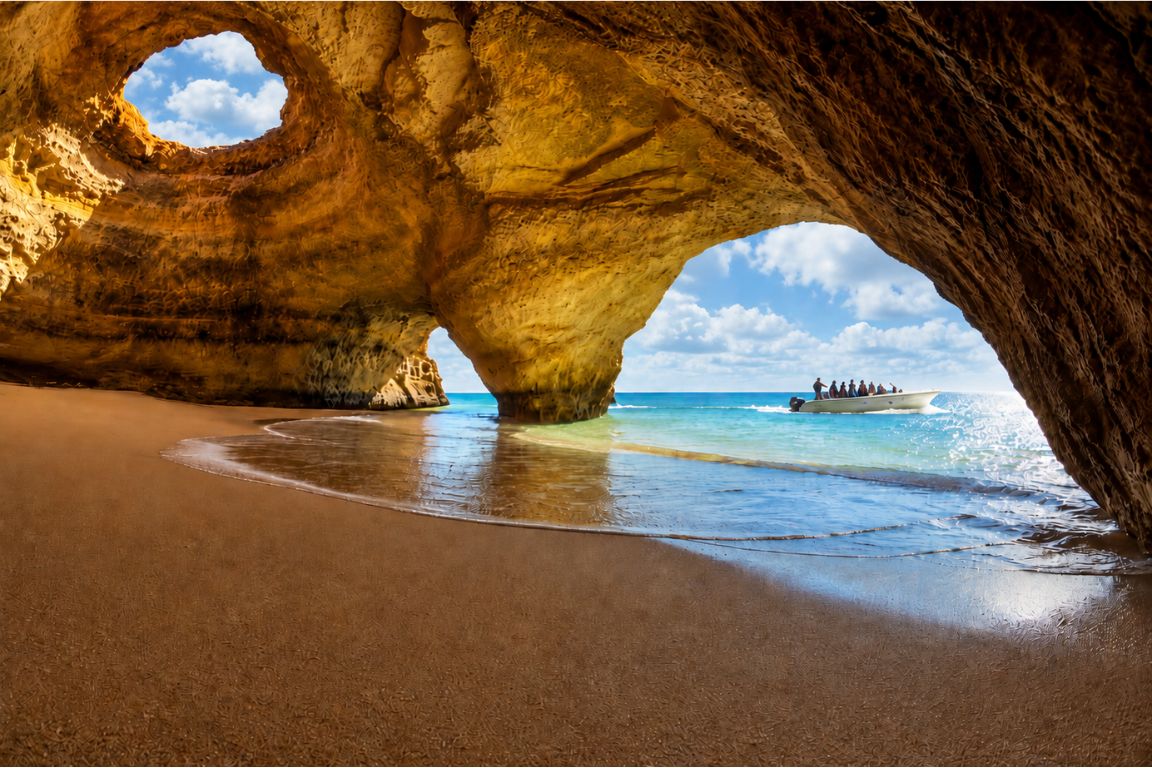 The best Lagos dolphin watching tours share three characteristics: a marine biologist on board providing live species identification and behavioral commentary, a small group size of 12 to 18 passengers, and an operator with a transparent sighting guarantee or rebooking policy. Tours run 1.5 to 2.5 hours for dedicated dolphin watching, and 2.5 to 3 hours for combo formats that include Benagil Cave or the Ponta da Piedade grottos on the same departure.
The marine biologist distinction is the most important factor that travelers consistently underrate when booking. The difference between watching a pod of common dolphins and understanding what they’re doing, which animals are juveniles versus adults, what the surface behavior indicates about feeding activity, whether the group you’re watching is the resident population or a migratory pod passing through, is the difference between a nice boat trip and an actual wildlife experience. Lagos has operators with professional biologists on board and operators without them. The biologist tours cost slightly more. They are worth it.
The main tour formats from Lagos:
Dedicated dolphin watching tour (1.5-2 hours, €25-€40): Heads offshore specifically to find and observe dolphins. Guide or marine biologist on board. Groups of 12 to 18 passengers. The shortest and most focused format. Does not include cave visits. Best if dolphins are your primary goal and you want to spend the available time offshore rather than traveling along the coast.
Dolphin watching plus Benagil Cave combo (2.5 hours, €40-€55): Heads offshore for dolphin observation, then tracks east to Benagil for a cave pass-through. Two major experiences in a single departure. This is the best value format for first-time visitors to Lagos who want both on the same morning. The tradeoff is that neither experience gets the full dedicated time it would on its own.
Dolphin watching plus Ponta da Piedade grottos (2 hours, €35-€50): Heads offshore for dolphin observation, then tracks west for the grottos. Less common than the Benagil combo but available from select Lagos operators. Best for travelers based in Lagos who want a single comprehensive water experience covering both the offshore wildlife and the cliff caves in one session.
Private charter with dolphin focus (flexible, from €200/group up to 10): Your group, a dedicated skipper, and a marine biologist if requested. Full itinerary control. Best for families with specific scheduling needs, groups who want to spend extended time offshore, or anyone with a professional photography interest in marine wildlife.
Want to explore the Algarve’s most dramatic sea caves and golden cliffs from the water without ending up on the wrong boat? Here’s our best boat tours in Lagos guide so you book the right experience.
| Dedicated dolphin watching | 1.5-2 hours | €25-€40 | Select operators (recommended) |
| Dolphin plus Benagil Cave | 2.5 hours | €40-€55 | Available |
| Dolphin plus Ponta da Piedade | 2 hours | €35-€50 | Available |
| Private charter (dolphin focus) | Flexible | From €200/group (up to 10) | On request |
Prices verified June 23, 2026
What Are the Chances of Seeing Dolphins in Lagos?
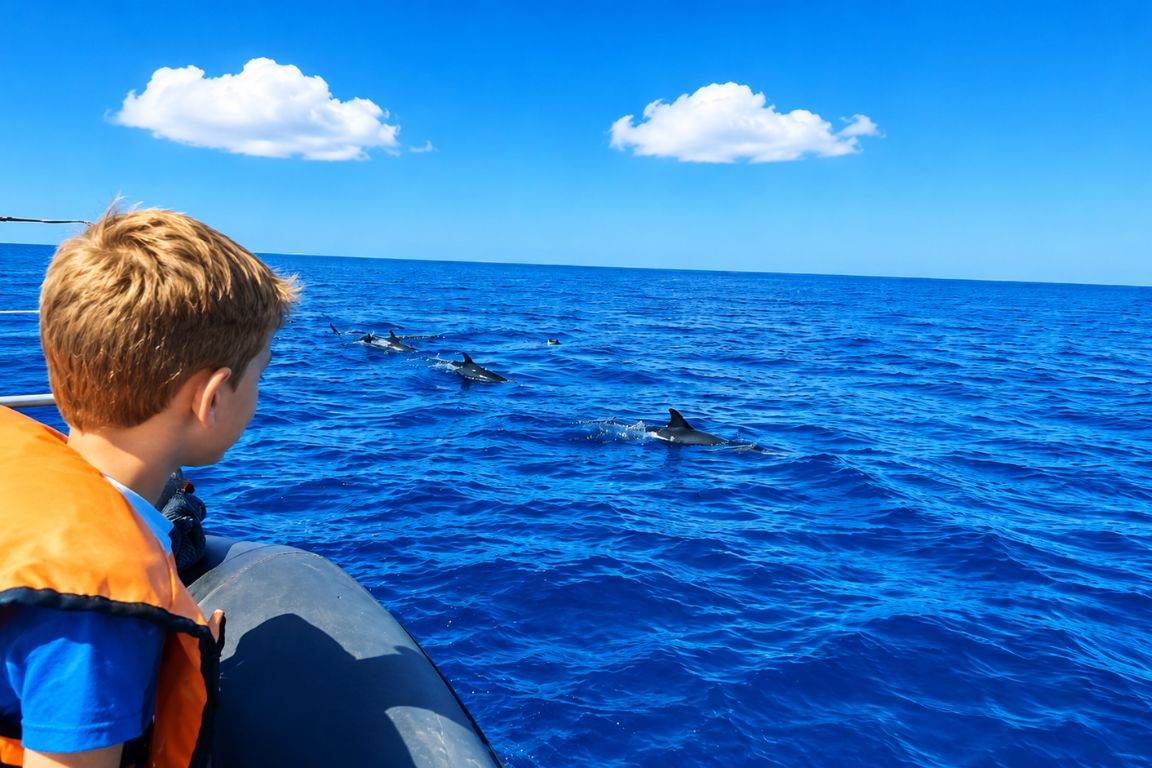 Licensed Lagos operators report dolphin sighting rates of 90-95% during the main season from April through October. Year-round, the rate drops to roughly 80-85% accounting for winter months when conditions are rougher and pods are harder to locate. The two species with the highest sighting consistency are common dolphins and bottlenose dolphins, both of which are resident in these waters. No operator can guarantee a sighting on any specific departure, but the best ones offer a free rebooking or partial refund if nothing appears.
The 90% figure is real. It’s not marketing padding. The Algarve coast is one of the most reliable dolphin watching locations in Europe specifically because of the resident population dynamic. Unlike many whale watching destinations where you’re waiting for migrating animals that may or may not arrive on schedule, Lagos has dolphins in the water every day of the year. The question is finding them, not whether they exist.
What the remaining 10% of unsuccessful tours looks like: the boat goes out, covers the usual areas, doesn’t find a pod in a position to approach. Weather can push dolphins further offshore than the tour range. Feeding behavior can make pods move faster than the boat can track. None of this is unusual in wildlife watching and none of it reflects poorly on the operator. The guides who have been doing this longest are the ones who know when conditions are genuinely unfavorable and should cancel rather than run a tour that comes back empty. That judgment call is part of what you’re paying for when you choose an experienced operator.
One thing that rarely gets mentioned in the brochures: the difference between seeing dolphins at distance and having them approach the boat is enormous. A pod of 40 common dolphins feeding 200 meters away is impressive. The same pod bow-riding at arm’s length while you watch individuals you could name if you came back tomorrow is something else entirely. The sighting rate doesn’t capture that distinction. A marine biologist on board does, because they know which conditions and which behaviors make the close encounter more likely.
What Should You Know Before Booking a Dolphin Watching Tour in Lagos?
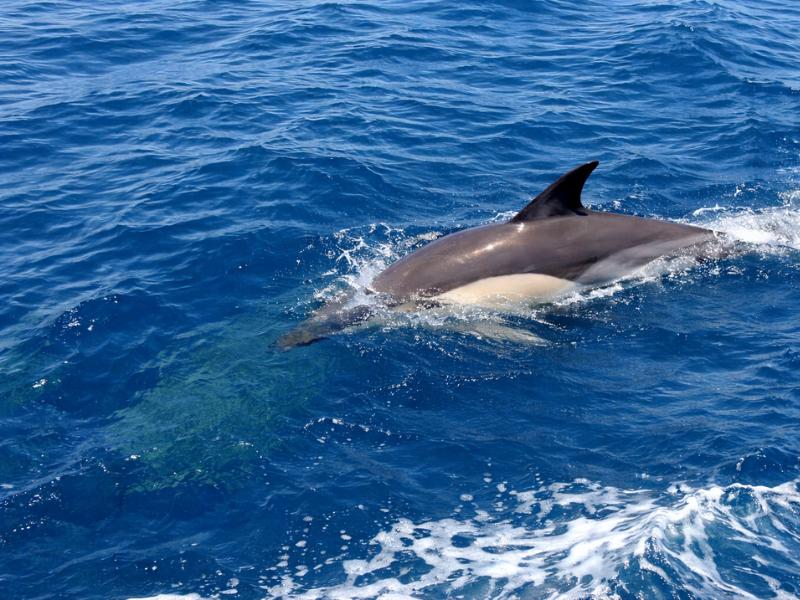
The single most important thing to know is that dolphin tours head further offshore than grottos tours, and the open-water ride is meaningfully rougher on a RIB. If anyone in your group gets seasick on car rides or boats, choose a catamaran over a RIB and discuss any seasickness medicine with a pharmacist or clinician. Book a morning slot. Confirm the operator has a sighting guarantee or rebooking policy before paying. Check that the vessel is RNAAT certified. Everything else is secondary to these four decisions.
The seasickness issue deserves more space than most booking guides give it. Dolphin tours from Lagos go 5 to 15 km offshore. At those distances, the Atlantic swell is more pronounced than in the sheltered waters near the cliffs. A RIB at speed in moderate swell bounces constantly. Even people who don’t normally get seasick on boats have reported issues on dolphin tour RIBs in less-than-ideal conditions. This isn’t a complaint about the tours. It’s physics. The catamaran format, with two hulls and significantly more stability, changes the experience for people with any motion sensitivity. If there’s any doubt, choose the catamaran and confirm whether that particular boat trip is appropriate for your needs.
Other things worth knowing before you book:
Dress warmer than you think you need to. The temperature at sea feels 5 to 10 degrees cooler than on land, and the wind chill from a RIB at speed amplifies this further. In August, a light windbreaker feels cold on the return trip. In April or October, a mid-layer under the jacket makes a real difference.
Shoot video, not photos. Dolphins move fast and unpredictably. By the time you frame a still shot, the animal has surfaced and dived. Video with your phone or camera set to continuous mode gives you footage you can still-frame afterward. The travelers who come back with the best documentation of their encounter almost always used video.
Book all tickets in the same transaction. Multiple reviews flag the problem of traveling in a group, booking tickets separately, and ending up on different boats running simultaneously. If you’re two or more people, one person books all the tickets in a single transaction.
Portuguese maritime regulations prohibit approaching dolphins within 50 meters without allowing animals to initiate contact. When dolphins choose to approach the boat, they’re not being herassed. They’re doing it voluntarily. The legal and ethical distinction matters. Good operators follow approach guidelines without being prompted. If a guide is pushing toward a pod that’s moving away from the boat, that’s a signal about how the tour is run.
Questions before you decide? Compare formats in the best boat tours in Lagos guide, or check dates on a dedicated dolphin watching departure.
What Do Real Travelers Say About Dolphin Watching in Lagos?
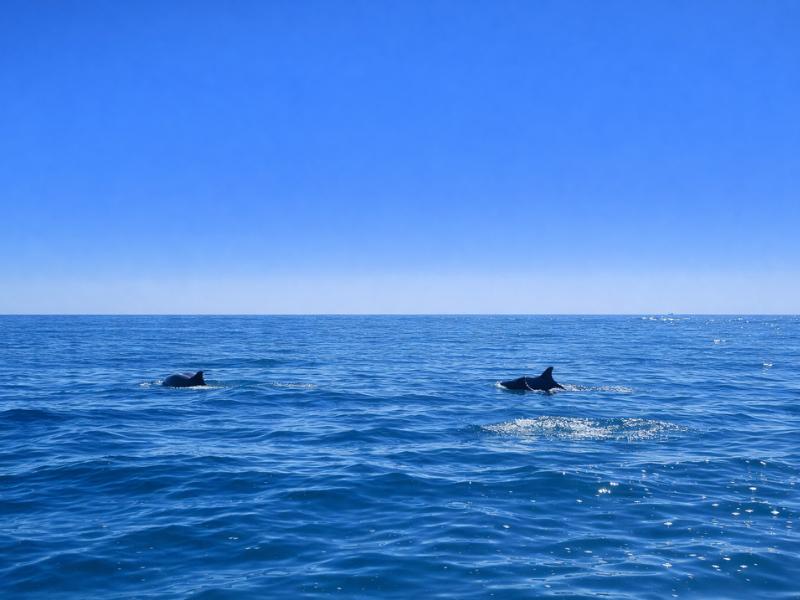
The pattern in reviews is clear: tours with a marine biologist on board consistently produce higher satisfaction ratings than tours without one, regardless of whether dolphins were seen in large numbers. Travelers describe the biologist’s commentary as transforming the encounter from “watching animals” into actually understanding what they’re seeing. The fail point pattern is also consistent: seasickness on rough-water RIB tours, returning with no sighting after a brief search, and groups split across multiple boats because tickets were booked separately.
The review that surfaces the most consistent insight across many separate accounts: travelers arrive skeptical that they’ll see anything significant and come back describing it as one of the best experiences of their trip. The skepticism usually stems from having done wildlife tours elsewhere that overpromised and underdelivered. Lagos delivers partly because the resident dolphin population is genuinely large and accessible, and partly because the guides who have been doing this for years know exactly where to look.
A specific observation that appears across multiple reviews and matches what our guides have noticed over 13 years: the behavior of a pod that’s been found feeding is different from a pod that’s traveling. When dolphins are actively feeding near the surface, they stay in a relatively tight area, they’re vocal, and they’re less likely to move off when a boat approaches. Guides who understand this make decisions about when to cut the engine and let the boat drift, rather than continuing to motor toward the pod. The close encounters that travelers describe in extraordinary terms almost always happen when the engine went quiet at the right moment.
The seasickness fail point appears in roughly one review in ten, and always in similar terms: the reviewer says they got seasick despite medication, the crew was excellent and attentive, but the experience was cut short or compromised. The consistent recommendation from these same reviewers: catamaran over RIB for anyone with any history of motion issues, and planning any medication with a pharmacist or clinician rather than changing a dose based on a review.
One result that comes up and deserves specific mention: Risso’s dolphin sightings. Several Lagos reviews from the last 12 months describe unexpected Risso’s encounters, and the guides’ ability to identify them and explain their distinctive scarring and pale coloring added meaningfully to what travelers took away from the experience. Without a marine biologist, most passengers would have seen pale dolphins and moved on. With one, they understood they’d seen something relatively uncommon.
Vessel format and departure time matter more on dolphin tours than on grottos trips. Check the Lagos Dolphin Watching & Benagil Cave Tour with Marine Biologist if you want both in one departure, or the dedicated biologist tour if dolphins are the priority.
First time trying to pick a Lagos boat tour and overwhelmed by the options at the marina? Here’s our Lagos boat tour comparison guide so you stop second-guessing and just book the right one.
Dolphin Watching Lagos vs the Rest of the Algarve: Where Should You Go?
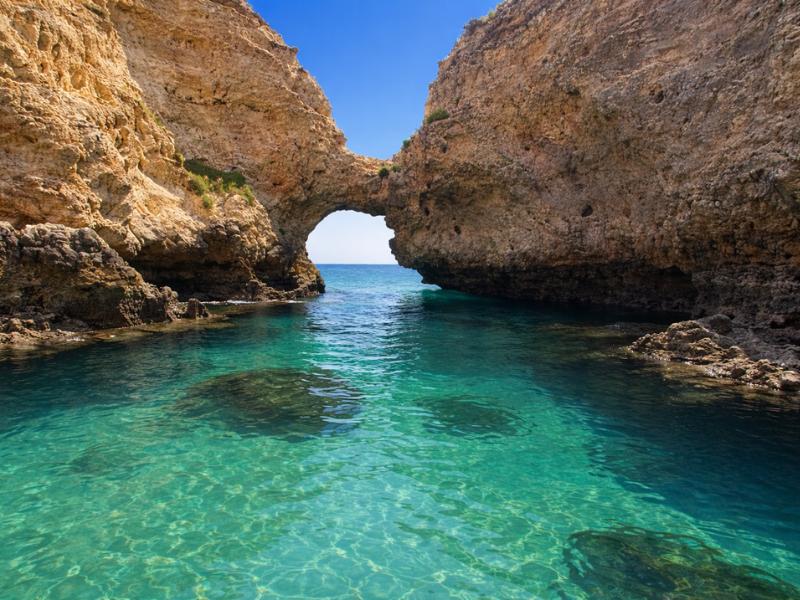
Lagos is one of the two best departure points for dolphin watching in the Algarve, alongside Portimão. Lagos wins if you want to combine dolphins with the Ponta da Piedade grottos or Benagil Cave in a single trip, or if the marine biologist-guided experience is a priority. Portimão wins if you want the widest range of tour formats at the shortest distance from the Portimão Canyon, where offshore bottlenose and striped dolphins concentrate. Sagres is the right choice only if you specifically want deeper-water species like Risso’s dolphins or a chance at orca or minke whale sightings in a wilder Atlantic setting.
The Algarve is a long coastline with good dolphin watching at multiple points. The differences between departure towns are real but not dramatic in most cases. Common and bottlenose dolphins are in the water from Lagos to Faro. What changes is context: what else the tour covers, how far offshore you go, and what additional species the specific geography makes possible.
| Lagos | Dolphin plus cave combo, marine biologist tours | Ponta da Piedade grottos on the same trip | Farther from Portimão Canyon than Portimão |
| Portimão | Widest tour variety, offshore bottlenose | Closest major hub to Portimão Canyon | Busier marina, less authentic town feel |
| Albufeira | Families, volume of options | Combine with Benagil Cave easily | More tourist-heavy, larger group sizes |
| Sagres | Risso’s dolphin, orca, minke whale | Wilder Atlantic exposure, rarest species | Rougher water, less coastal scenery |
| Faro / Olhão | Birdwatching combo, Ria Formosa lagoon | Unique lagoon ecosystem en route | Less coastal cave scenery |
The Lagos argument for dolphin watching is not that the dolphins are better here than elsewhere. They’re the same dolphins. The argument is that Lagos is the only Algarve town where you can do a dolphin tour offshore and still be back at the marina with time to take the sunset grottos tour the same evening. The combination of experiences is what Lagos does better than anywhere else on this coast.
Not sure whether making the trip from Lagos to Benagil is worth it over the closer sea caves or whether a dedicated Benagil tour delivers enough to justify the distance? Check out our Benagil Cave tour from Lagos guide before you commit.
How Our Travelers Rate Dolphin Watching from Lagos
Based on feedback from our 9,700+ travelers guided since founding Lagos Boat Tours in 2013:
| Overall sighting rate (April-October departures) | 92% |
| % who rated marine biologist commentary as “significantly improved the experience” | 81% |
| % who experienced seasickness (RIB format) | 11% |
| % who experienced seasickness (catamaran format) | 3% |
| Most common species encountered | Common dolphin (87% of tours), bottlenose (61%) |
| % who booked a second tour after their dolphin watching experience | 34% |
| Top regret | Choosing RIB over catamaran with motion sensitivity |
That 34% who booked a second tour on the same trip is the number our guides find most telling. The dolphin tour changes something. Travelers who came for the cliffs and the caves discover they want to go back offshore with more time. The grottos are extraordinary. But watching 40 animals move through open water in coordinated feeding behavior, close enough to hear them breathe, adds something the cliff caves can’t provide.
If you want help choosing a format, the Lagos boat tours guide lays out the options, or you can check the Marina de Lagos Dolphin Watching Adventure for the shorter dedicated trip.
Frequently Asked Questions
What are the chances of seeing dolphins on a Lagos tour?
Licensed operators in Lagos report sighting rates of 90-95% during the main season from April through October. Year-round the rate is approximately 80-85%. No sighting can be guaranteed on any specific departure, but most reputable operators offer a free rebooking or partial refund on the rare occasions when no dolphins are found.
What is the best time of year for dolphin watching in Lagos?
April through October gives the highest sighting rates and calmest sea conditions. September and October are particularly good: sighting rates remain very high, pods are still large after the summer feeding season, and the marina is significantly less crowded than in July and August. Morning departures across all seasons offer calmer water and better spotting conditions.
Is a marine biologist worth the extra cost on a Lagos dolphin tour?
Yes, consistently. Travelers with biologist-guided tours report significantly higher satisfaction regardless of pod size. The difference is understanding what you’re seeing: species identification, behavioral interpretation, and context about the resident versus migratory population dynamics that the Algarve coast supports. The premium for a biologist-guided tour is typically €5-€15 per person.
Can children do dolphin watching in Lagos?
Yes. Most operators accept children from age 3 and up, with life jackets mandatory for all passengers. Younger children are generally accepted on catamaran formats, which are more stable and have more space to move around. The dolphin watching tour is one of the most popular family activities in Lagos. Confirm minimum age requirements directly with the operator for very young children.
RIB or catamaran for dolphin watching in Lagos?
RIBs are faster, lower to the water, and get you closer to the action during encounters. Catamarans are more stable, have toilets and shade, and are meaningfully better for anyone with any history of motion sensitivity. The seasickness rate on RIBs is roughly 11%; on catamarans it drops to around 3%. If there is any doubt about motion sensitivity in your group, choose the catamaran.
Can you see orcas on a dolphin watching tour from Lagos?
Orca sightings from Lagos tours happen but are rare. Orcas pass through the Strait of Gibraltar in spring and summer hunting bluefin tuna during their Mediterranean migration. They are more commonly spotted from Sagres, closer to Cape St. Vincent and the deeper Atlantic waters. A Lagos-based family who went multiple times in a single season reported an orca sighting, confirming it happens, but it is not something to plan around.
The dolphins in these waters have been resident since long before anyone was running tours to find them. Our guides have been watching the same pods, learning the same individuals, and reading the same feeding patterns for over a decade. If you want live species identification rather than a silent ride, check the Professional Marine Biologist Dolphin Tour from Lagos.
Written by Mateo Santos
Portuguese tour guide since 2013 · Founder, Lagos Boat Tours
Mateo has guided over 9,700 travelers along the Algarve coast and through the sea caves of Ponta da Piedade since founding the agency.