Ponta da Piedade: The Complete Visitor Guide
The headland at the southern edge of Lagos is the reason most people put the western Algarve on their list. Here is how to see it properly, from the clifftop and from the water.
The boardwalk gives you the free clifftop perspective. Add a short boat trip or guided paddle if seeing the rock formations from water level matters to you.
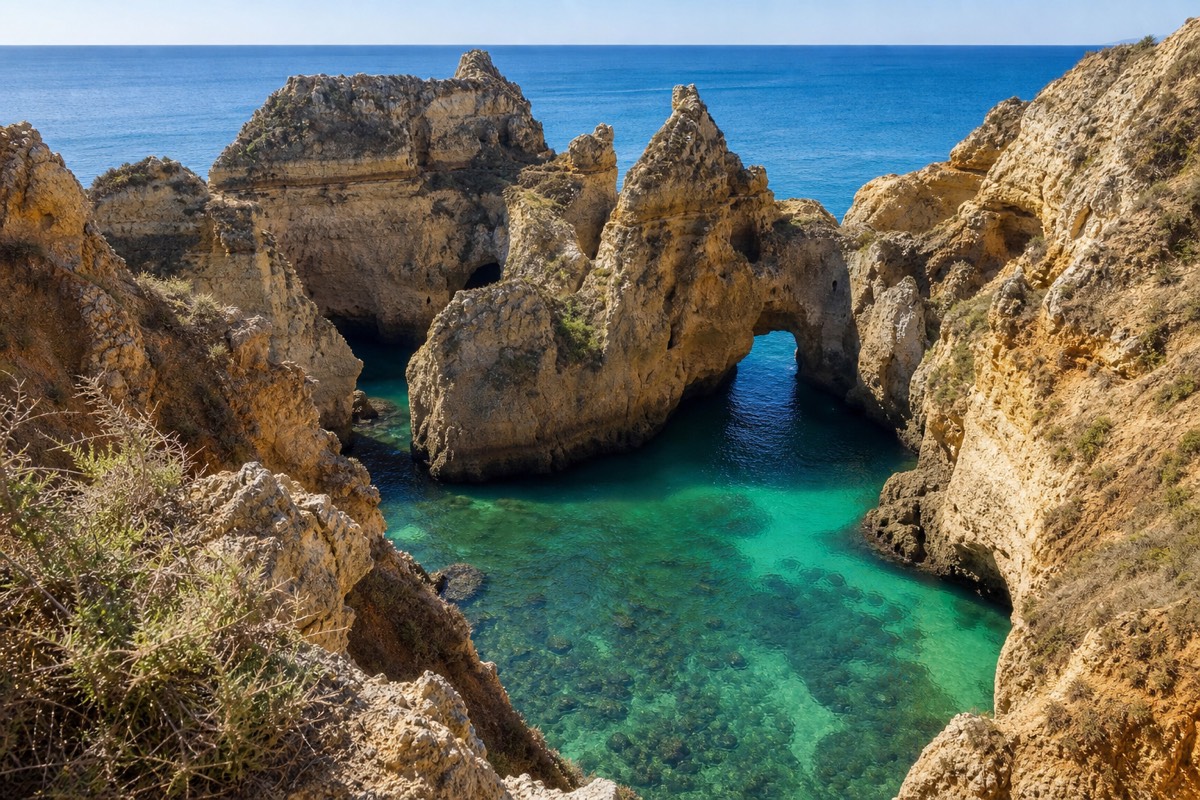
At a glance: four ways to see it
Walking gives you the views; a boat, kayak or paddleboard gets you into the grottoes.
What is Ponta da Piedade and why is it so famous?
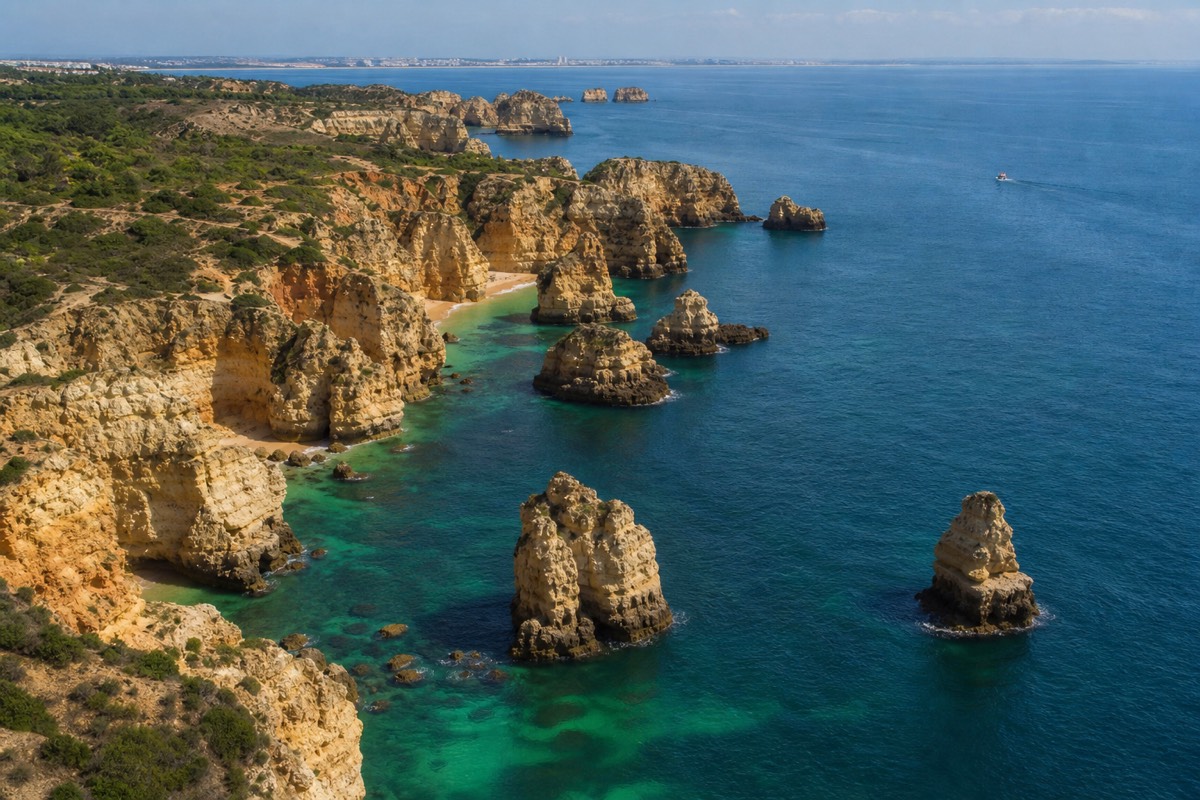
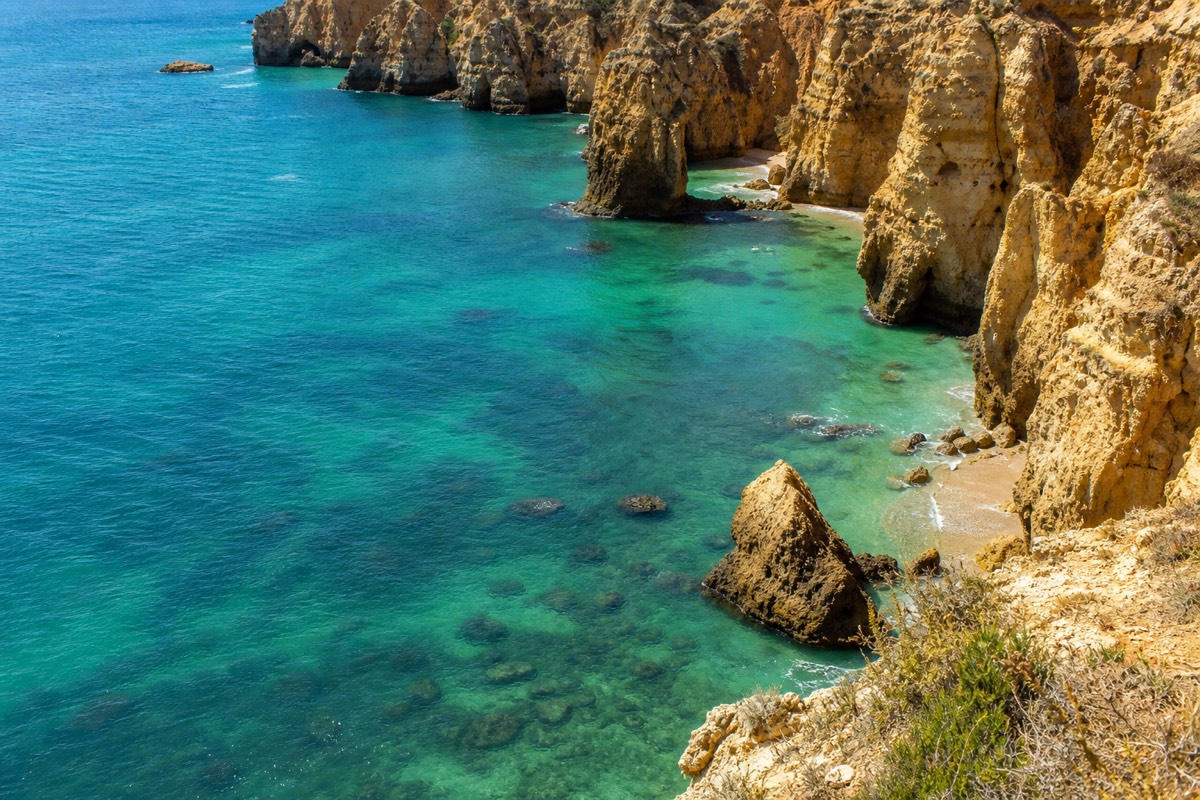
Ponta da Piedade is a headland of golden sandstone cliffs, sea stacks and hidden grottoes at the southern tip of Lagos, on Portugal's Algarve coast. Wind and Atlantic swell have carved arches, tunnels and turquoise pools into the soft rock, and the site ranks among the most photographed stretches of coastline in all of Europe.
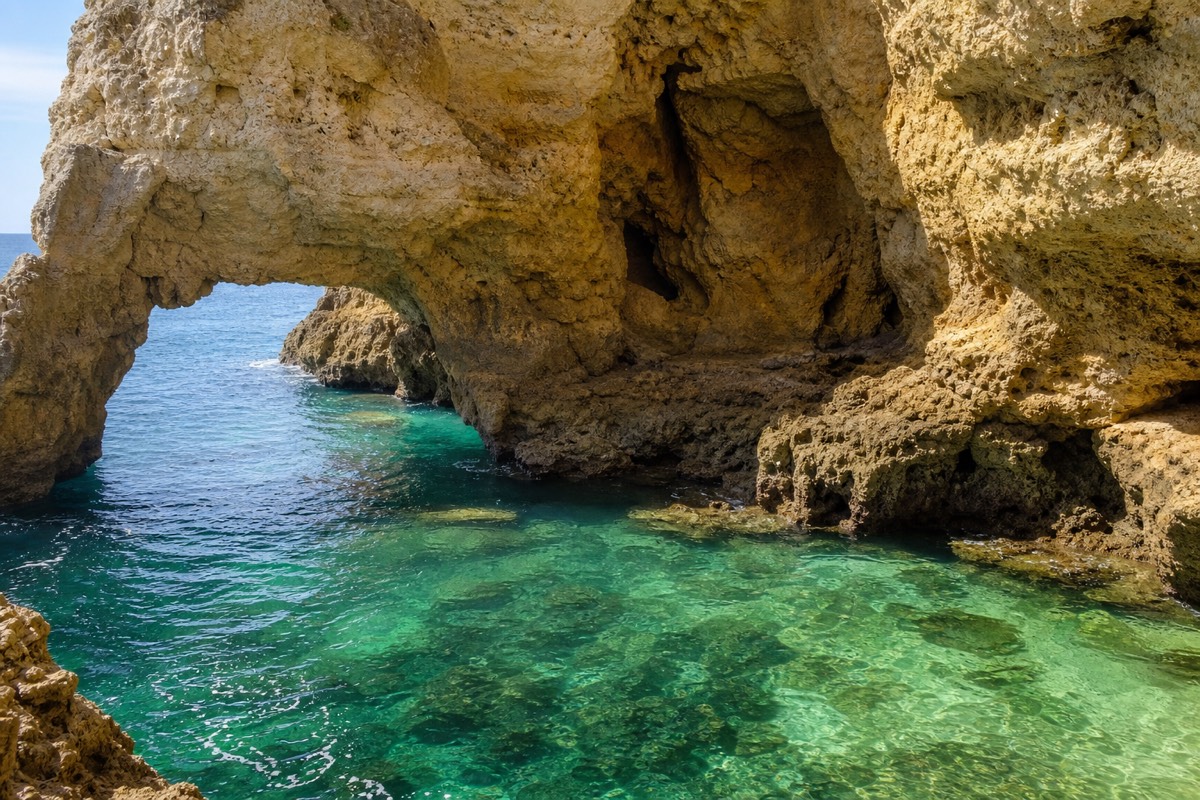
The name translates loosely as the Point of Mercy, and the headland sits roughly two and a half kilometres south of the old town. What draws people is the colour and the shape of the stone. The cliffs glow a deep ochre in low sun, the water below runs a clear green over pale sand, and the sea has sculpted the sandstone into pillars, natural bridges and caverns you can float a small boat through. Local skippers have named the more theatrical formations over the years, so on a grotto trip you will hear a guide point out an elephant, a camel's head and a rock they swear looks like the bow of the Titanic.
Ponta da Piedade belongs to the same run of soft, honey-coloured cliffs that produces the famous Benagil sea cave further east, but it has one advantage over its neighbour: it sits right on the doorstep of a real town, so you can walk out to it, look down from the top, and then drop to sea level on a boat that leaves from the marina in the same morning. Many of the best beaches in Lagos also cluster along this short section of coast, which is why the headland works so well as the anchor for a first day in the area.
What is the clifftop boardwalk (passadicos) like?
Wooden boardwalks, the passadicos, run along the cliff edge at the top of the headland and link a string of viewpoints. They are flat, free to use, open all hours, and railed on the drop side. Walking the full set takes about thirty to forty minutes at a slow, photo-heavy pace.
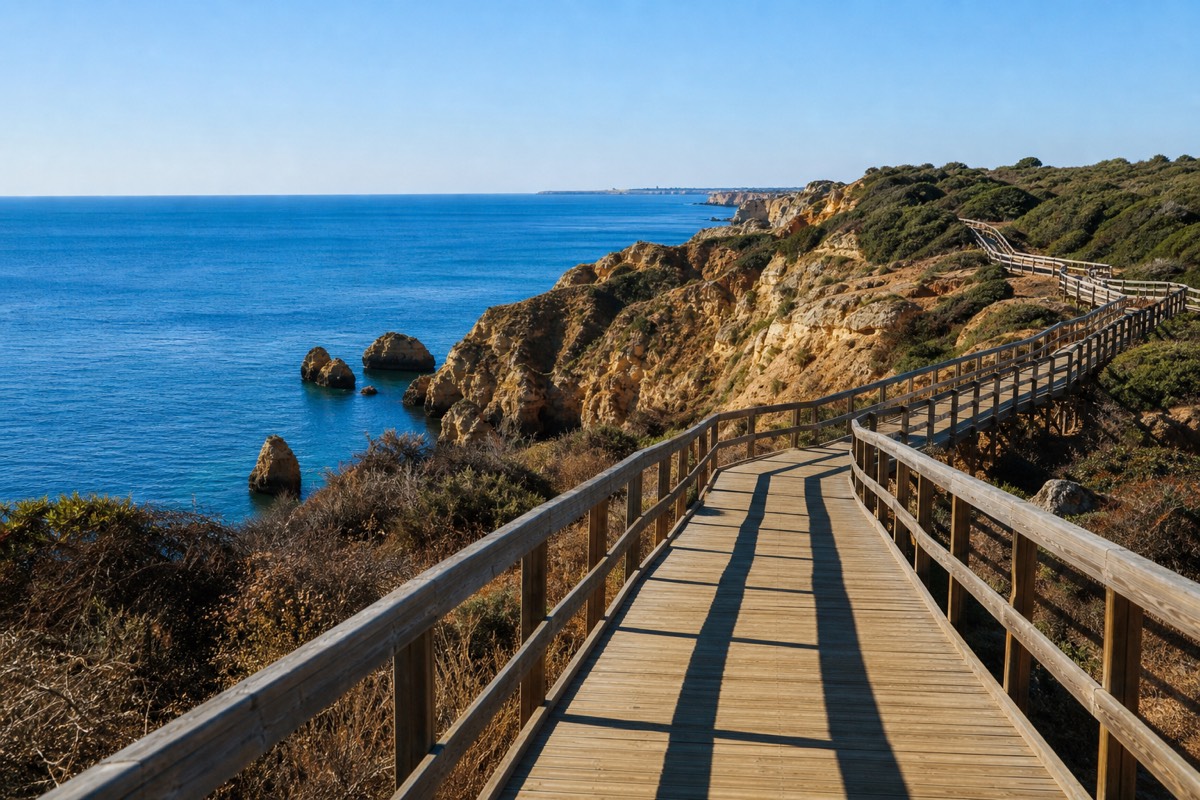
The boardwalk is the easy way to experience Ponta da Piedade, and it asks nothing of you beyond a pair of comfortable shoes. Timber decking carries you past the most exposed edges so you are not scrambling over loose stone or trampling the cliff-top scrub, and the railings mean you can lean out for a photo without a knot in your stomach. Benches appear at intervals, and the surface is even enough for a pushchair on the main stretches, though a few short gravel connectors between sections are bumpier.
The views change every few steps. One platform looks straight down a slot canyon of stacks, the next opens onto the open Atlantic, and a third frames the little jetty at the base of the staircase where the traditional grotto boats tie up. Early and late in the day the light does most of the work, but even at noon the scale of the drop and the colour of the water carry the walk. Bring water in summer, because there is very little shade up top.
How many steps lead down to the water, and who can manage them?
A single steep staircase drops from the clifftop to a small landing at sea level, around 182 steps in total. The climb back up is the hard part in midday heat. Anyone reasonably mobile can manage it at their own pace, but people with knee, hip or heart concerns should skip it.
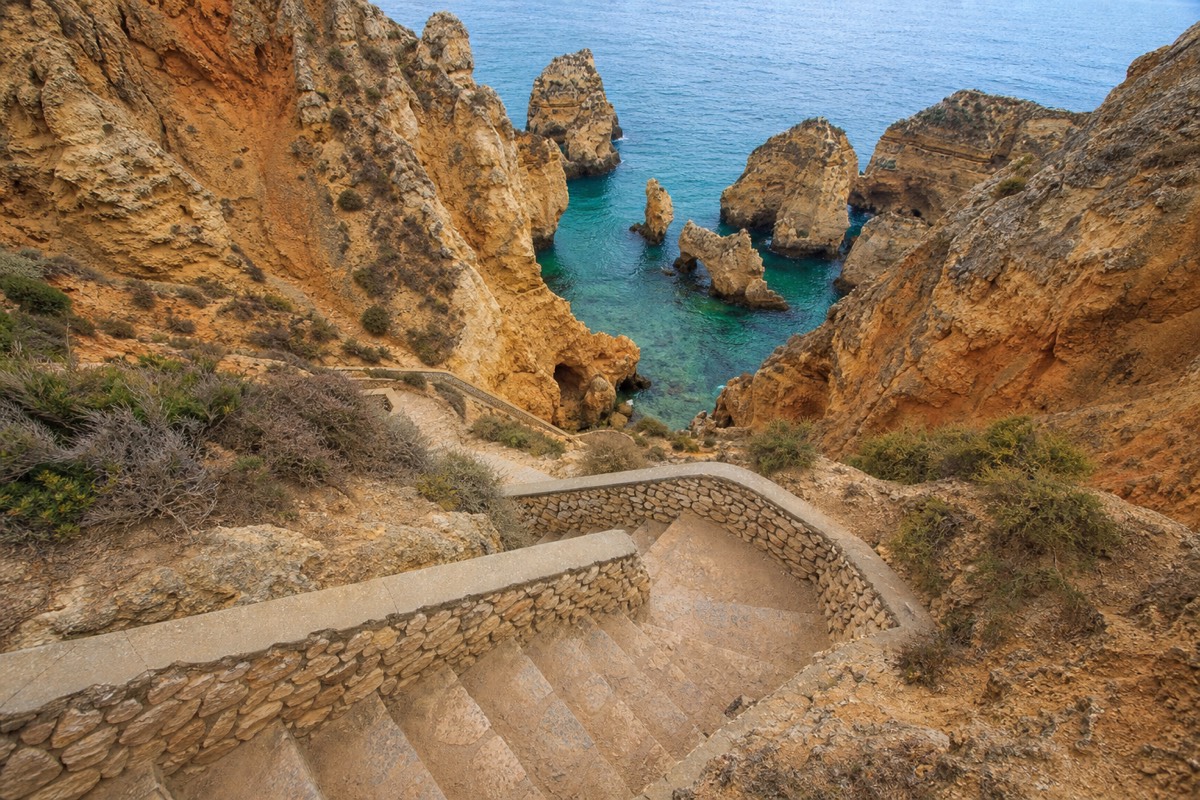
The staircase is carved and built into a cleft in the cliff, and it delivers you to a low platform where the water laps against the rock and the little wooden boats come and go. Standing down there, with the pillars rising overhead, is a completely different experience from looking down at them, and it is the closest you get to the grottoes without actually going out on the water. There is no lift, no ramp and no alternative gentle route, so the steps are the only way to the bottom on foot.
Go down slowly, use the handrail, and be honest about the return leg. The climb up is short but genuinely steep, and in July and August the stone radiates heat by late morning. The table below sorts out who should attempt it and what the alternatives are.
| Visitor | The staircase | Better alternative |
|---|---|---|
| Fit adults and older children | Very doable; pace yourself on the way up | None needed, but go early to beat the heat |
| Families with toddlers | Possible carrying a small child, tiring in heat | See the grottoes from a small-group grotto boat trip instead |
| Knee, hip or heart concerns | Not recommended; the climb back is steep | Enjoy the clifftop boardwalk, then book a boat at sea level |
| Wheelchair or limited mobility | Not accessible | The boardwalk viewpoints; confirm wheelchair boarding for any proposed cruise |
| Anyone in peak-summer midday | Doable but hot and busy | Descend before 10am or after 5pm when the stone is cooler |
Where is the lighthouse (farol) and what surrounds it?
The lighthouse, the Farol da Ponta da Piedade, stands on the flat top of the headland. It is a working navigation light, compact rather than tall, and not generally open inside. The area around it is the main arrival point, with parking, a snack van and the trailheads for the boardwalk and steps.
Think of the lighthouse as the hub of the whole visit. Taxis and tuk-tuks drop you beside it, the car park sits a short walk away, and from the small plaza at its base the boardwalks spread out in both directions along the cliffs. A van usually sells cold drinks and ice cream near the top in season, which is welcome after the climb back up the staircase.
The lighthouse itself is modest, a white tower with a red lantern, and its job is to warn shipping off the rocks rather than to serve as a tourist attraction, so most visitors photograph it in passing and spend their time at the viewpoints instead. On a clear day the outlook from the headland runs a long way along the coast, and this is one of the finest sunset spots in the area, with the sun dropping into the Atlantic beyond the stacks.
Which viewpoints give the best views of Ponta da Piedade?
The strongest viewpoints are the main platform beside the lighthouse, the boardwalk overlooks that frame the sea stacks, the top of the staircase looking down the cleft, and the landing at sea level. Each shows the same rock from a different height, and together they make the headland worth an unhurried hour rather than a quick stop.
People often arrive, take one photo from the car park and leave, which sells the place short. The reward here comes from moving between vantage points and watching the same pillars change character as your angle shifts. The table below maps the main viewpoints, what each one is best for, and the effort involved.
| Viewpoint | What you see | Effort | Best for |
|---|---|---|---|
| Lighthouse plaza | Wide clifftop panorama and the open Atlantic | None, step from the car park | First impression, sunset |
| Northern boardwalk overlooks | The tallest stacks and arches from above | Flat walk, a few minutes | Classic photos, framing the pillars |
| Top of the staircase | The cleft dropping to the sea and the boat jetty | Short walk to the rim | Sense of scale and depth |
| Sea-level landing | The pillars towering overhead, water at your feet | Around 182 steps down and back | Close-up rock, cool shade |
| From a boat below | Inside the grottoes, arches and tunnels | A booked trip from the marina or jetty | The formations you cannot see from land |
How do you get to Ponta da Piedade from Lagos?
You can walk from the old town in about thirty minutes along the cliffs, take a taxi or tuk-tuk in five to ten minutes, or drive and park by the lighthouse. The clifftop walk is the most rewarding on the way out; a taxi is the sensible way back once the heat sets in.
The headland is close enough to reach on foot, which surprises people who expect a long excursion. From the marina and old town you follow the coast south past the town beaches and up onto the cliff path, and the route itself is scenic, passing several of the best beaches in Lagos along the way. In high summer, start early so the walk out happens before the day heats up.
Drivers should know that the small car park by the lighthouse fills quickly in season and the final approach roads are narrow, so an early arrival saves a lot of circling. Tuk-tuks wait around the marina and waterfront and run a steady shuttle up to the point, which many families prefer for at least one leg of the trip. The table lays out the options.
| Option | Time from town | Rough cost | Good to know |
|---|---|---|---|
| Walk along the cliffs | About 30 to 40 minutes | Free | Scenic, some gentle hills, little shade; take water |
| Taxi | 5 to 10 minutes | A short metered fare | Easiest return leg after the steps |
| Tuk-tuk | 10 to 15 minutes | A set tourist price, agree first | Fun with kids, waits near the marina |
| Drive and park | About 10 minutes | Fuel only, parking is free | Small lot by the lighthouse, fills fast in summer |
| By boat from the marina | Part of a booked trip | Check the live listing | Skips the walk and shows the grottoes at water level |
What are the three ways to see the grottoes at water level?
You can see the grottoes at sea level by motorboat, by guided kayak or by stand-up paddleboard. A small boat covers the most ground with no effort and enters the wider caves; a kayak reaches the narrowest passages and is active; a paddleboard is the most intimate and the most tiring. All three leave the clifftop crowds behind entirely.
The clifftop is only half of Ponta da Piedade. The pillars, arches and caves only reveal their insides from the water, and the way you choose to get down there shapes the whole day. A Ponta da Piedade grotto boat trip is the low-effort option: you sit in a stable small boat, a skipper threads it into the wider caverns, and you get plenty of photo stops without lifting a paddle. The small-group trip the site lists runs about seventy-five minutes for a planning allowance of around $32 per adult, check the live listing for current pricing.
A guided kayak tour flips the priorities. You paddle a double kayak into slots and tunnels no motorboat can enter, with a support boat shadowing the group, and you finish with a swim. Reckon on around $47 per adult as a planning figure, check the live listing. The stand-up paddle tour is the quietest and closest to the water of all, ideal on a calm morning, and asks the most of your balance and stamina at roughly $55 per adult. If you would rather stay dry and add lunch, a half-day Ponta da Piedade cruise combines the grottoes with a swim stop and a Portuguese meal on board. The table sets the four approaches side by side.
| Way to see it | What you get | Effort | Rough cost | Time on the water |
|---|---|---|---|---|
| Clifftop walk only | Views from above, no grottoes inside | Low, flat boardwalk | Free | Not applicable |
| Grotto boat trip | Wider caves, arches, most ground covered | None, you sit and look | Around $32 per adult | About 75 minutes |
| Guided kayak tour | Narrowest passages, a swim, a workout | Moderate paddling | Around $47 per adult | About 2 hours |
| Stand-up paddle tour | The most intimate, water-level angle | Higher, needs balance | Around $55 per adult | About 2 hours |
Prices above are planning guidance only. Always check the live listing for current pricing, departure times and availability, which change with the season.
What is the best time of day and light for photographs?
Early morning and the last two hours before sunset give the best light and the fewest people. Morning brings the calmest water and the clearest colour for boat and kayak trips; late afternoon lights the cliffs a deep gold and turns the headland into a prime sunset spot. Midday is harsh, hot and crowded.
The sandstone is at its most photogenic when the sun is low and raking across the rock rather than blasting straight down on it. A morning visit rewards you twice over, with soft light on the stacks and the flattest sea for getting into the caves, which is also why boat and paddle operators favour early slots. If your plan is to shoot the headland itself, the golden hour before sunset is unbeatable, and it doubles as one of the finest places in Lagos to watch the day end.
Season matters as much as time of day. The clearest turquoise water tends to arrive in late spring and early summer, autumn holds warm light with thinner crowds, and winter brings dramatic skies and the odd rough sea that closes the boats. The best time to visit depends on whether you want swimming warmth or photographic drama. The table gives a quick read on the day.
| Time of day | Light and sea | Crowds | Best for |
|---|---|---|---|
| Early morning | Soft light, calmest water, clearest colour | Low | Boat and kayak trips, quiet photos |
| Late morning | Brightening, water still fair | Building fast | The boardwalk before the coach parties |
| Midday | Harsh overhead sun, hot stone | Heaviest | Skip it, or take a shaded lunch break |
| Late afternoon | Warm gold on the cliffs | Easing | Portraits, the deep colour of the rock |
| Sunset | Fiery sky over the Atlantic | Moderate at the top | The classic sunset from the lighthouse |
How crowded does it get, and how do you beat the crowds?
From late morning through mid afternoon in summer the clifftop and the staircase get genuinely busy, with tour groups queueing at the narrow overlooks. The fix is simple: arrive before 10am or after 5pm, and see the grottoes from the water, where the crowds thin out the moment you leave the shore.
Ponta da Piedade is popular for good reason, and in July and August the middle of the day brings a steady stream of coaches, tuk-tuks and walkers to a headland with only so much room on its platforms. The pinch points are the top of the staircase and the most photographed overlooks, where people bunch up to get the same shot. None of this ruins the visit, but it changes the mood, and the difference between a serene morning and a shoulder-to-shoulder noon is real.
The reliable escape is the water. A grotto boat trip, a guided kayak tour or a stand-up paddle tour pulls you away from the shore crowds and into caves most day-trippers never see from the inside. People often ask whether the neighbouring cave is any calmer, and the honest answer to the question of is Benagil Cave worth it is that Benagil is even busier at peak times, so the smart move is to enjoy both from the sea rather than fighting for a foothold on land. That is the whole idea behind the small-group departures that Lagos Boat Tours works with, which leave from Marina de Lagos and time their runs to dodge the worst of the midday rush.
What should you bring, and how accessible is the headland?
Bring water, sun protection and grippy shoes, and go early in summer. The clifftop and its viewpoints are broadly accessible on the flat boardwalks, but the staircase to the water is not: there is no ramp or lift. Wheelchair users and anyone with limited mobility should check the exact boat’s boarding arrangements and route before considering a water-level trip.
Ponta da Piedade is an exposed headland with almost no natural shade, so the difference between a comfortable visit and a miserable one often comes down to a few small preparations. The stone gets hot and slippery underfoot, the wind off the Atlantic can be sharp even on a warm day, and the only refreshment on site is a seasonal van by the lighthouse. Pack for a short but sun-drenched outdoor stop rather than a shaded stroll.
On access, the clifftop delivers a lot to visitors who cannot manage stairs. The boardwalks are flat and firm, the main viewpoints sit close to the car park, and the panorama over the sea stacks needs no descent at all. What is out of reach on foot is the sea-level landing and the grottoes themselves, which is exactly where a boat earns its keep: a suitable boat may offer coastal views, but boarding access and cave entry must be verified for the specific vessel. The checklist below covers the practical kit.
| Bring | Why | Especially in |
|---|---|---|
| Water | No shade and only a seasonal drinks van up top | Summer |
| Sun protection | Hat, sunscreen and sunglasses; the light bounces off the sea | All year |
| Grippy shoes | The staircase and rock landing can be slick | After rain, morning dew |
| A light layer | The Atlantic breeze bites on the exposed clifftop | Spring, autumn, evenings |
| Camera or phone | Every viewpoint is a photo; a waterproof pouch helps on the boat | All year |
| Cash for the van or tuk-tuk | Small vendors and drivers may not take cards | All year |
What does a sample morning at Ponta da Piedade look like?
A good half-day pairs an early boat or kayak run to the grottoes with a slow walk along the clifftop boardwalk and a coffee by the lighthouse, finished before the crowds and the heat arrive. You are back in the old town for lunch with the best of the headland already behind you.
The trick is to front-load the day. Water first, while the sea is calm and the light is soft, then the clifftop, then out before noon. This sequence keeps you ahead of the coach parties and spares you the hottest, most crowded hours on the exposed rock. The timeline below is a realistic template you can shift earlier or later to suit your booking.
| Time | What you are doing | Note |
|---|---|---|
| 8:30am | Coffee in the old town, walk or taxi to the marina | Beat the heat and the queues |
| 9:00am | Grotto boat trip or guided kayak tour from the marina | Calmest water, clearest colour, book ahead |
| 10:30am | Back on land, walk the clifftop boardwalk | Photograph the stacks from above |
| 11:15am | Descend the staircase to the sea-level landing | Around 182 steps down and back, go slowly |
| 12:00pm | Cold drink by the lighthouse, taxi or tuk-tuk back | Save your legs for the afternoon |
| 12:45pm | Lunch in the old town or on a cliff-top terrace | The headland is quiet by evening for a sunset return |
Whatever shape your day takes, the pattern that works is water early, clifftop after, and the crowds avoided at both ends. Ponta da Piedade rewards a little planning more than almost any other stop on this coast.