The Best Beaches in Lagos, Portugal
Few towns pack this much beach variety into a short walk: sheltered golden coves, a four-kilometre open sand, and hidden pockets you can only reach by boat. Here is how to pick the right one.
The beaches remain an independent plan. Add a boat or paddle only if you want the cliff and grotto views from the water; it is not a beach transfer.
At a glance: the beaches compared
Flat beaches for families in town; the prettiest coves need steps, a boat or a kayak.
Which is the best beach in Lagos overall?
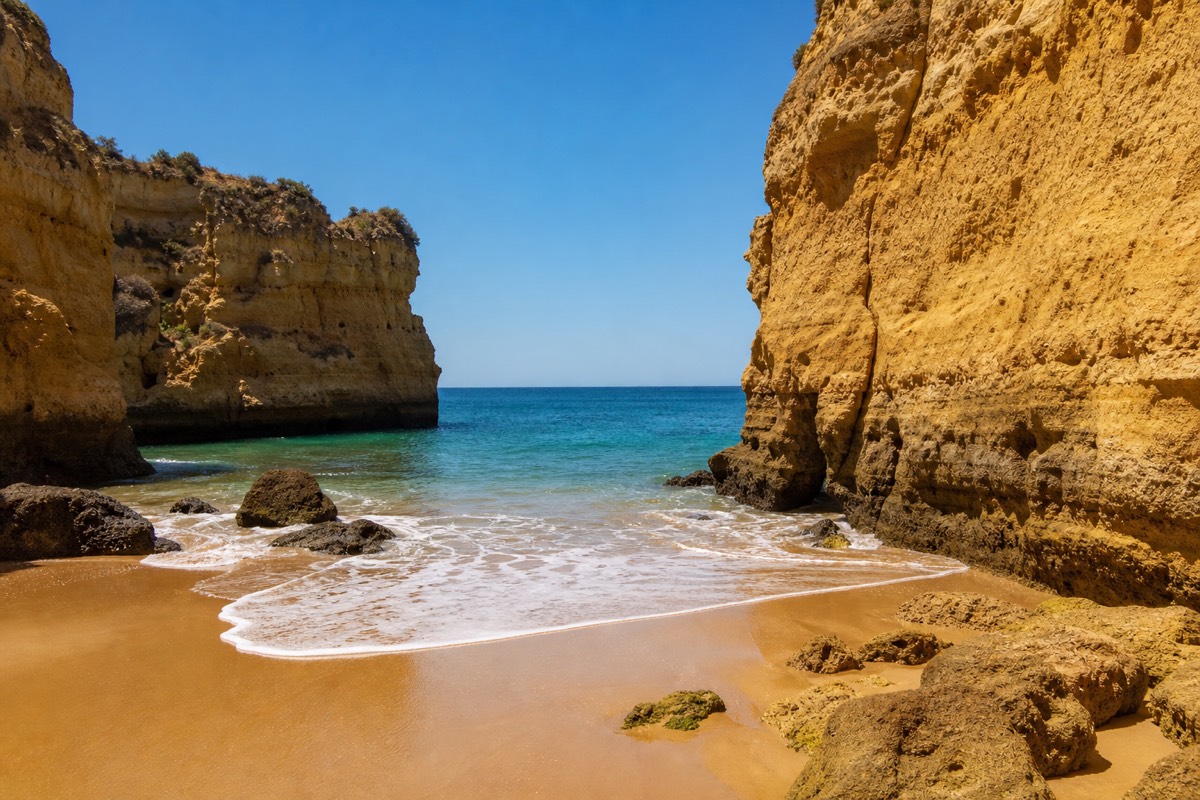
Praia Dona Ana is the best all-round beach in Lagos: a sheltered golden cove with calm, clear water, dramatic cliffs and easy access close to town. For open space and water sports, Meia Praia wins instead. The right answer depends on whether you want scenery in a small cove or room to spread out.
Lagos has an unusually rich set of beaches for its size, and there is no single winner for everyone. What tips the balance toward Praia Dona Ana is the combination that most people come to the Algarve for: soft sand, water the colour of glass, honey-coloured cliffs and sea stacks framing the cove, and a location you can reach in about fifteen minutes from the old town. It photographs beautifully and stays calm because the cliffs shelter it from the swell.
That same shelter is why the cove beaches around Ponta da Piedade feel so protected and warm. If your priority is space, a long walk or a game of beach football, the four-kilometre sweep of Meia Praia is the better call. The rest of this guide breaks down each beach so you can match the place to your day, and points out the hidden coves that only open up from the water.
What makes Praia Dona Ana special, and how do you reach it?
Praia Dona Ana is the classic Algarve postcard: a sheltered cove of pale sand ringed by golden cliffs and sea stacks, with calm, clear, shallow water that suits families. It sits about fifteen minutes south of the old town, reached by a cliff path, road or tuk-tuk, with a stairway down to the sand.
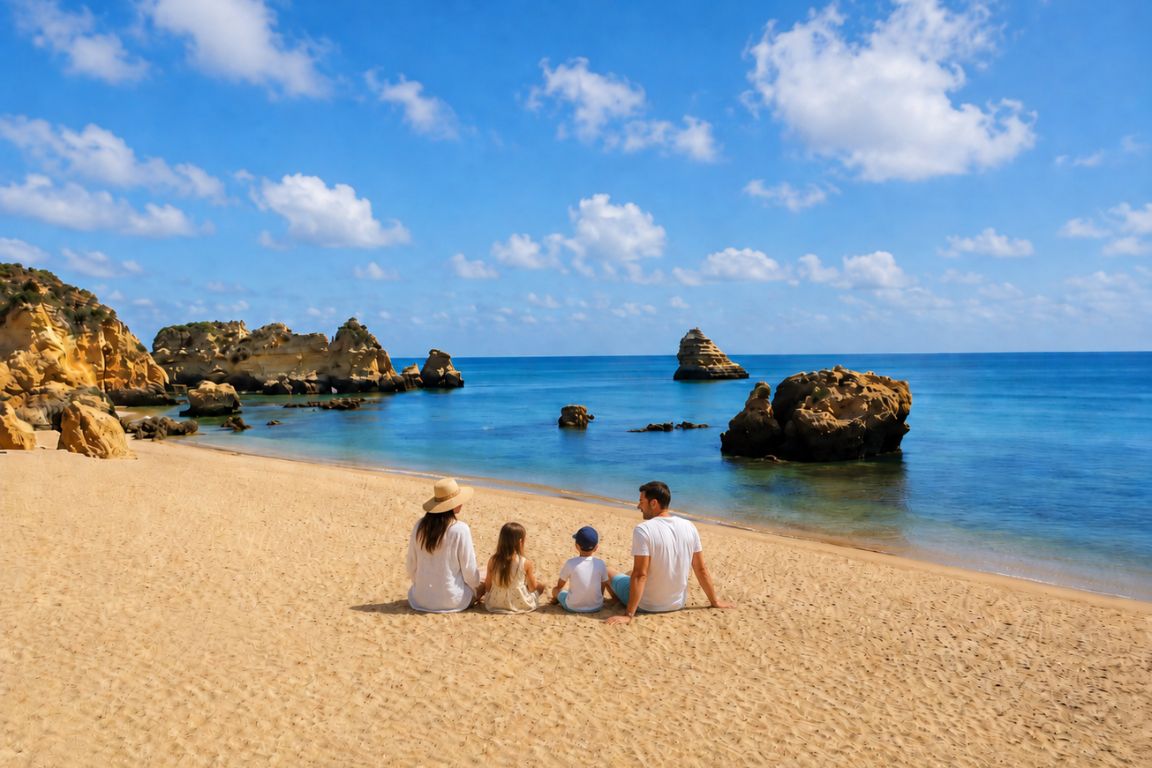
This is the beach that sells the western Algarve. The cove is enclosed by tall ochre cliffs, pierced by little arches and studded with pillars offshore, and the water inside stays sheltered, warm and startlingly clear. It is the best beach in Lagos for families with young children, because the sea rarely produces the surf you get on the open coast and the shallows shelve gently. A beach cafe, sunbed hire and seasonal facilities keep it comfortable.
Access is straightforward: it is a short walk or drive from the centre, with a stairway leading from the clifftop down to the sand. The catch is popularity. Praia Dona Ana fills fast on peak summer mornings and can reach capacity by around ten o'clock, so early birds get the best of it. Arrive before nine, or treat it as a first stop before the crowds and move on to more space later.
Is Praia do Camilo worth the wooden stairs?
Yes. Praia do Camilo is a small, very pretty twin cove reached by a long wooden staircase of roughly two hundred steps. The descent puts off enough people to keep it quieter than its famous neighbour, and a short rock tunnel links its two sandy pockets. The climb back is the price of a lovely cove.
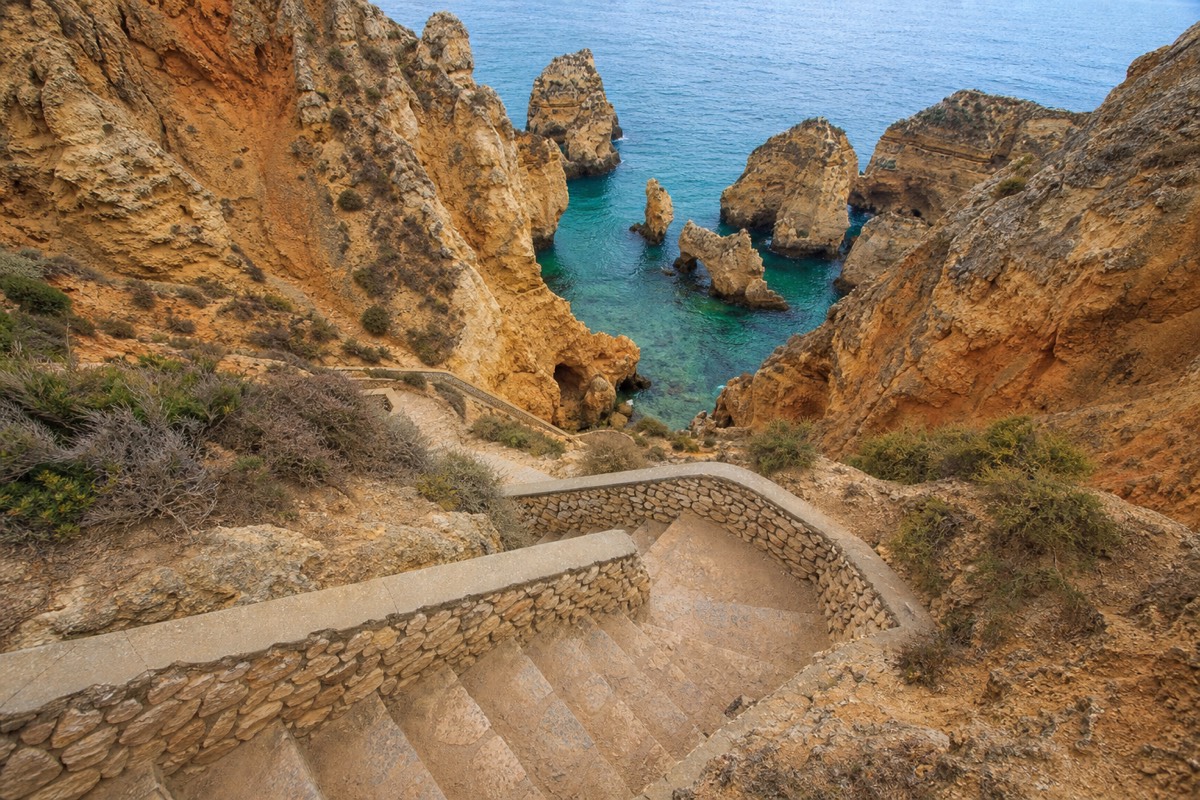
Camilo sits just along the cliffs from Dona Ana and trades a little convenience for a lot of charm. The wooden stairway zigzags down the cliff face, and at the bottom you find a compact beach split into two by the rock, with a natural tunnel cut through the stone connecting them. The water is clear and calm, the cliffs glow, and the whole scene is postcard-perfect on a bright morning.
The stairs do real work as a filter. They keep the beach smaller and quieter than the more accessible coves, though in high summer even Camilo fills by late morning. The climb back up is short but steep, so it is less suited to anyone with knee or mobility concerns, and there is limited shade at the bottom. For the reward, most people count the steps a fair trade. A cliff-top cafe near the top handles drinks and the return-leg recovery.
Why choose Meia Praia over the coves?
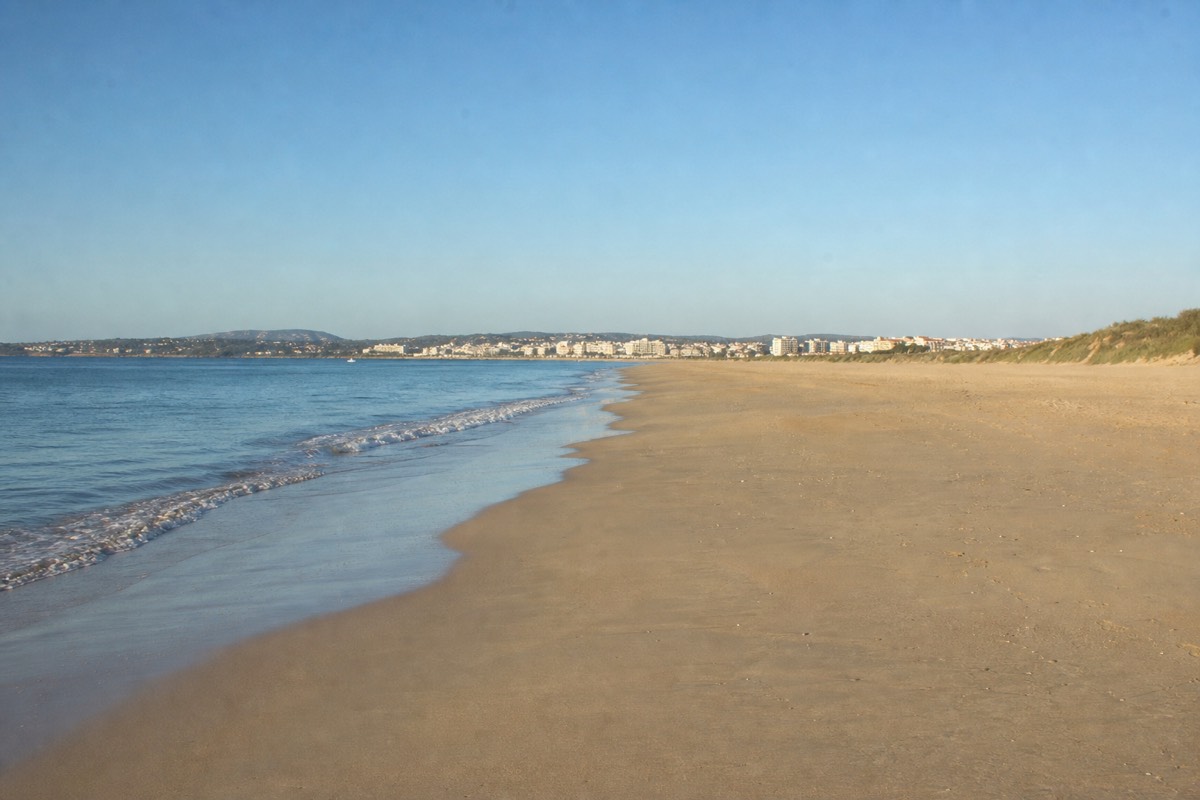
Meia Praia is the antidote to crowded coves: a flat, open sweep of golden sand running about four kilometres east from the marina. It rarely feels packed, it has room for walking, ball games and water sports, and it is an easy walk or short hop from the old town. Choose it for space rather than dramatic cliffs.
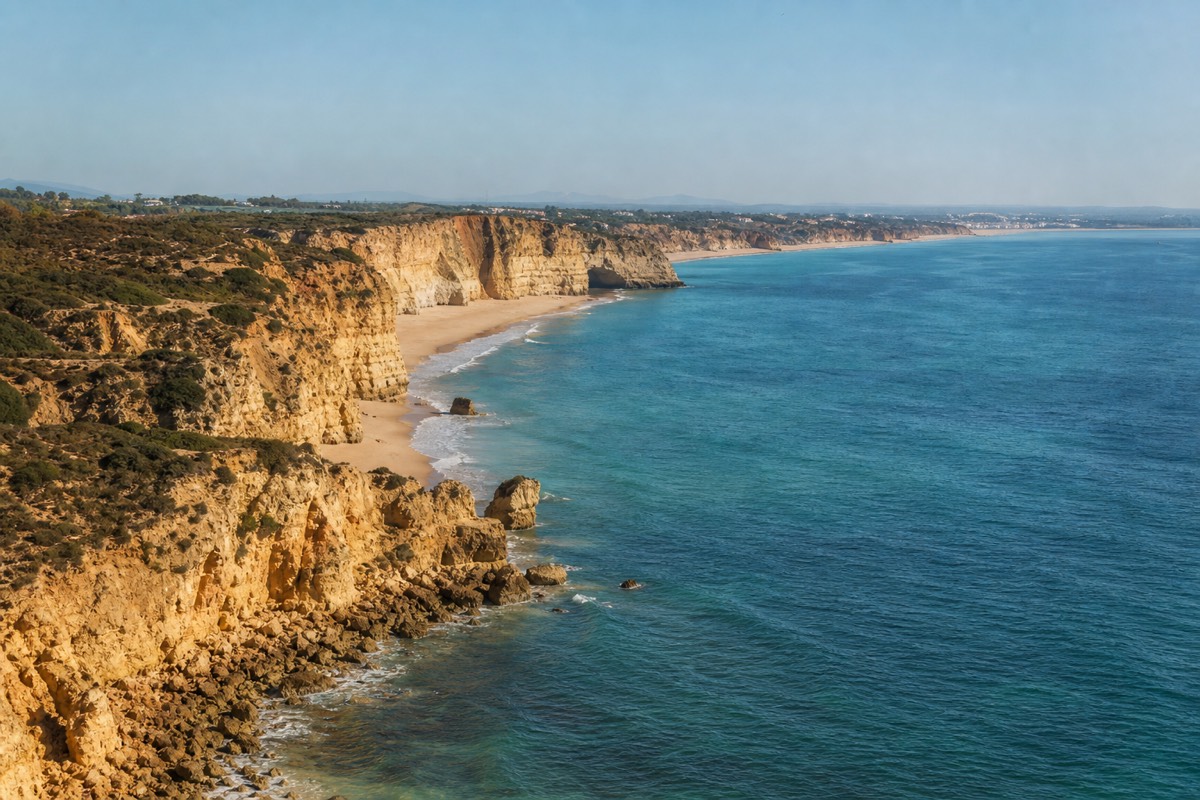
Where the cove beaches are small and enclosed, Meia Praia is broad and unhurried. Its length means that even on a busy August day you can find a stretch to yourself simply by walking a few minutes from the access points. The sand is soft and flat, the shelving gentle, and the openness that costs it the sea-stack drama earns it space, breeze and long shallow water that children can wade in for ages.
This is the beach to head for when Praia Dona Ana fills by mid-morning, and it is a favourite for water sports thanks to its size and the wind that funnels along the coast. Beach bars and restaurants dot its length, and a footbridge and easy paths connect it to the marina and town. If your idea of a beach day is a long walk and room to breathe rather than a photogenic huddle under the cliffs, Meia Praia is the pick.
What about the town beaches: Batata, Pinhao and Balanca?
Praia da Batata is the closest beach to the old town, a short flat walk with a rock tunnel through to smaller neighbours. Praia do Pinhao and Praia da Balanca are tiny, quieter coves tucked into the cliffs just west of it. All three are sheltered, scenic and handy when you want sand without leaving town.
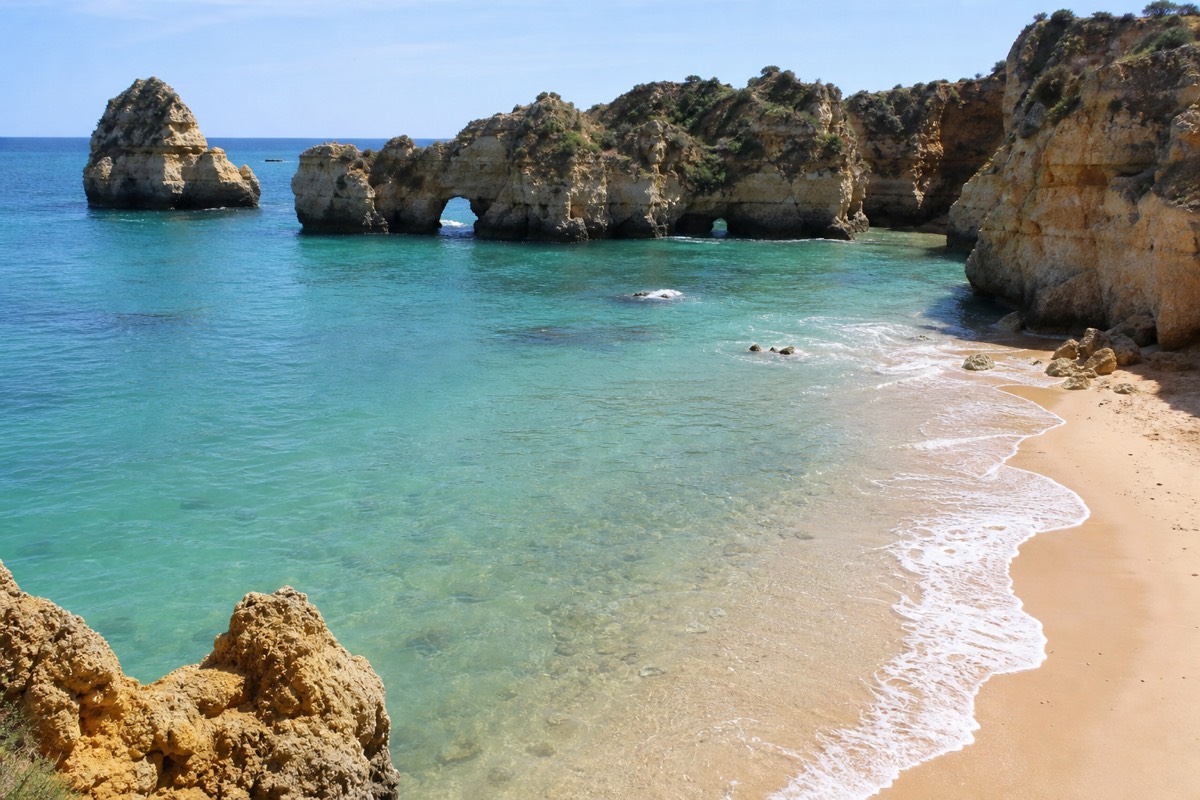
Not every Lagos beach needs a hike or a drive. Praia da Batata sits right below the town, a couple of minutes on the flat from the marina and the fort, which makes it the default for a quick swim between other plans. It is sheltered by the headland, and a short tunnel cut through the rock links it to a smaller cove next door, a feature children love to duck through.
Just west, Praia do Pinhao and Praia da Balanca are pocket-sized coves reached by short cliff paths, quieter than Batata because they take a little more effort and hold fewer people. They share the same sheltered, clear water and golden rock as their bigger siblings, in miniature. None of these town beaches is large, so they get busy in peak season, but their proximity is unbeatable when you have an hour to spare. The table below sums up how the main beaches compare.
| Beach | Access | Size | Crowds | Best for |
|---|---|---|---|---|
| Praia Dona Ana | Stairway from clifftop, 15 min from town | Medium cove | Fills by mid-morning | Families, scenery, calm swimming |
| Praia do Camilo | Around 200 wooden steps | Small twin cove | Busy but a touch quieter | Photos, a prettier, calmer cove |
| Meia Praia | Flat, walk or short hop from town | Very large, about 4 km | Rarely packed | Space, walking, water sports |
| Praia da Batata | Flat, closest to the old town | Small to medium | Busy, very handy | A quick swim near town |
| Praia do Pinhao | Short cliff path | Small cove | Quieter | Escaping the crowds close in |
| Praia da Balanca | Short cliff path | Tiny cove | Quiet | Seclusion within walking distance |
Is Praia da Marinha near Lagos worth the drive?
Yes, if you have a car and time. Praia da Marinha, about forty-five minutes east of Lagos, is one of the most celebrated beaches in Portugal, framed by sculpted arches and the twin sea-arch formation nearby. It is not in Lagos itself, but it pairs naturally with a trip to the Benagil cave on the same stretch of coast.
Marinha is the beach that tops national lists, a broad cove backed by dramatic cliffs and reached by a stairway from a clifftop car park. The water is clear and deep-turquoise, and the walking trail along the cliffs above it leads to the viewpoint over the famous double arch, a short stroll that ranks among the best coastal walks in the Algarve. It sits close to the Benagil sea cave, so many people combine the two.
The honest caveat is distance. Marinha is a drive from Lagos rather than a walk, and it gets very busy in season with limited parking, so an early start pays off. If you are car-free, the easiest way to see this part of the coast is from the water on a coastal cruise, which reaches the arches and the Benagil cave without a parking battle. As a day out, it rewards the effort.
Which hidden coves can only be reached by boat or kayak?
The most secluded beaches around Lagos have no land access at all: small sandy pockets tucked beneath the cliffs of Ponta da Piedade and along the coast toward Benagil, reachable only by boat, kayak or paddleboard. On a guided kayak tour or a small cruise you can land on sand that day-trippers on the clifftop never touch.
For every beach with a staircase, this coast hides several with none. The cliffs between Lagos and the neighbouring coves conceal tiny beaches at the foot of the rock, cut off from any path, that only open up when you approach from the sea. This is the real prize of getting on the water: not just the grottoes, but the chance to swim off a private scrap of sand with the cliffs rising sheer above you.
A guided kayak tour is the most hands-on way in, threading into slots and landing where larger boats cannot, while a Ponta da Piedade grotto boat trip shows you the same hidden coastline at a gentler pace. A relaxed catamaran cruise anchors off the prettier coves for a swim and snorkel stop, coves like Marinha and Albandeira further east, and lets you drift between them at leisure. The table below shows which beaches need a boat.
| Beach or cove | Reachable by | What you get |
|---|---|---|
| Praia Dona Ana, Camilo, Batata | On foot from town | Golden coves with stairways or flat access |
| Meia Praia | On foot from town | Open sand and space |
| Hidden coves below Ponta da Piedade | Kayak or small boat | Sand with no land access, near-private swims |
| Coves toward Benagil | Catamaran or cruise | Swim and snorkel stops off the boat |
| Marinha and Albandeira | Drive, or by cruise from the water | Celebrated arches and clear deep water |
What facilities do the Lagos beaches have?
Most main Lagos beaches have a seasonal cafe or restaurant, sunbed and umbrella hire and summer lifeguards, with parking near the clifftop coves and along Meia Praia. The town beaches sit closest to shops and toilets. The hidden coves reached by boat have no facilities at all, so carry water and shade.
Facilities in Lagos scale with how easy a beach is to reach. The popular coves and the long open beach are well served in season, with somewhere to eat, sunbeds to rent and lifeguards on duty through summer, so you can turn up with a towel and buy the rest. The town beaches add the convenience of shops, toilets and cafes a two-minute walk away in the old town. Out of season, many beach cafes close and lifeguard cover ends, so pack more of your own supplies.
The trade-off is a familiar one on this coast: the more remote and beautiful the cove, the fewer the comforts. The pockets of sand you reach only by boat or kayak have nothing at all, which is part of their appeal but means you carry your own water, snacks and shade. The table shows what to expect where.
| Beach | Food and drink | Sunbeds | Lifeguard (summer) | Parking |
|---|---|---|---|---|
| Praia Dona Ana | Beach cafe or restaurant | Yes, seasonal hire | Yes | Clifftop, fills early |
| Praia do Camilo | Cliff-top cafe | Limited | Yes | Small clifftop lot |
| Meia Praia | Several beach bars and restaurants | Yes | Yes | Ample along the beach |
| Praia da Batata | Cafes a short walk in town | Limited | Yes | Town parking nearby |
| Pinhao and Balanca | Little to none on site | No | Seasonal or none | Street parking above |
| Hidden coves by boat | None, bring your own | No | No | Not applicable |
How far is each beach, and how many steps are there?
The town beaches are flat and closest, a few minutes from the centre. Praia Dona Ana is about fifteen minutes out with a stairway to the sand, Praia do Camilo needs roughly two hundred wooden steps, and Meia Praia is a flat walk or short hop east of the marina. The hidden coves need a boat.
Access is the quiet factor that decides which beach suits which traveller. Anyone with a pushchair, a mobility concern or simply no appetite for a staircase in the heat should weigh the descent before choosing. The town beaches ask almost nothing, the signature coves ask for a stairway, and Camilo in particular is a proper climb back up, short but steep, that rewards the effort with a lovely twin cove.
Distances here are all modest by the standards of a beach holiday. Nothing worth reaching is more than a quarter of an hour from the old town on foot, and a taxi or tuk-tuk trims even that. The table below lays out the walk and the steps for each so you can plan around little legs and tired knees.
| Beach | From the old town | Steps to the sand | Effort |
|---|---|---|---|
| Praia da Batata | 2 to 5 minutes, flat | None, level access | Very easy |
| Praia do Pinhao | About 10 minutes | A short cliff path | Easy |
| Praia Dona Ana | About 15 minutes | A stairway from the clifftop | Easy to moderate |
| Praia do Camilo | About 15 to 20 minutes | Around 200 wooden steps | Moderate, steep return |
| Meia Praia | 10 to 15 minutes or a short hop | None, flat access | Very easy |
| Hidden coves | By water only | Step off the boat or kayak | Depends on the trip |
How safe is swimming at the Lagos beaches?
Swimming is generally calm and safe at the sheltered coves, where the cliffs block the swell, which is why they suit families. Meia Praia and the open beaches can pick up surf and current on windy days. Summer lifeguards patrol the main beaches, flags mark the conditions, and the Atlantic stays bracing even in high summer.
The cliffs that make the coves so photogenic also make them safe to swim. By blocking the Atlantic swell, they leave the water inside Praia Dona Ana, Praia do Camilo and the town beaches calm, shallow and clear, which is exactly why families gravitate to them. The open beaches are a different story: Meia Praia catches more wind and can throw up surf and a pull along the shore on a breezy afternoon, so keep an eye on children there.
Through the summer, lifeguards watch the main beaches and post coloured flags, green for safe, yellow for caution, red for no swimming, and it pays to read them before you wade in. One constant surprises first-timers: the water here is Atlantic, not Mediterranean, so even in July it stays refreshingly cool, warmest from July to September. The table sums up the swimming conditions.
| Beach type | Typical conditions | Good for |
|---|---|---|
| Sheltered coves | Calm, clear, shallow, little surf | Families, weak swimmers, snorkelling |
| Open beach (Meia Praia) | Can be breezy with surf and current | Strong swimmers, water sports |
| Town beaches | Sheltered and handy, busier | A quick, easy dip near town |
| Hidden coves by boat | Calm but unpatrolled, no lifeguard | Confident swimmers off the boat |
Which beach fits your need: families, seclusion, sunset or snorkelling?
For families, choose Praia Dona Ana or Meia Praia for calm, shallow water. For seclusion, take a boat or kayak to the hidden coves or walk to Pinhao and Balanca. For sunset, the Ponta da Piedade clifftop beats any beach. For snorkelling, the clear, sheltered coves and a boat stop off the rocks are best.
Beaches are not interchangeable, and the fastest way to a good day is to match the place to the plan rather than default to the nearest sand. A family with toddlers wants shelter and shallows; a couple after a quiet swim wants a cove that takes effort to reach; a snorkeller wants clear water over rock. The table sorts the beaches by what you actually need from the day.
| Your need | Best beaches | Why |
|---|---|---|
| Families with young children | Praia Dona Ana, Meia Praia | Calm, sheltered, shallow water and facilities |
| Seclusion and quiet | Hidden coves by boat, Pinhao, Balanca | Little or no crowd, effort keeps numbers down |
| Scenery and photos | Praia do Camilo, Praia Dona Ana | Golden cliffs, arches and clear water |
| Space and water sports | Meia Praia | Four kilometres of open flat sand and wind |
| Snorkelling | Sheltered coves, a boat stop off the rocks | Clear water over rock draws more marine life |
| Sunset | Ponta da Piedade clifftop | The finest golden-hour view on this coast |
When is the best time to visit the beaches in Lagos?
Late spring and early autumn are the sweet spot: warm sea, clear water and thinner crowds than high summer. July and August bring the hottest weather and the fullest coves, so arrive before nine to claim a spot. Water is warmest from July to September, and mornings everywhere are calmer and quieter than afternoons.
The Algarve has one of the longest beach seasons in Europe, and the shoulder months reward you with almost everything summer offers minus the crush. May, June, September and early October hold warm days, clear sheltered water and space on the sand, which is why they are the best time to visit if you can choose. Peak July and August are glorious but busy, and the small coves reach capacity early.
Whatever month you pick, timing within the day matters as much as the calendar. Mornings bring the calmest, clearest water and the emptiest sand, while afternoons pick up wind and people. On the busiest days, an early cove visit followed by a shift to Meia Praia or a boat trip keeps you ahead of the crowds. The small-group departures that Lagos Boat Tours works with time their runs for the calmer morning sea, which is also the best window for a Ponta da Piedade grotto boat trip to the hidden coves. The table gives a quick month-by-month read.
| Period | Weather and sea | Crowds | Verdict |
|---|---|---|---|
| April to May | Warming air, cooler sea, clear water | Light | Great for scenery and space, brisk swims |
| June | Warm, clear, water warming up | Building | One of the best all-round months |
| July to August | Hottest, warmest sea | Heaviest | Superb but book and arrive early |
| September | Warm, warmest sea, softening light | Easing | Arguably the finest month overall |
| October | Mild, sea still warm, quiet sand | Light | Relaxed, fewer facilities open |