Things to Do in Lagos, Portugal
Lagos packs a working fishing port, a walled old town and one of Europe's great stretches of cave coast into a place you can cross on foot. Here is what actually earns your time.
Keep the free walks and beach time, then choose the guided activity that adds something distinct: grotto views, wildlife interpretation, food or an inland day.
At a glance: the highlight reel
A rough running order for a first visit, water first while the sea is calm.
What is the single best thing to do in Lagos?
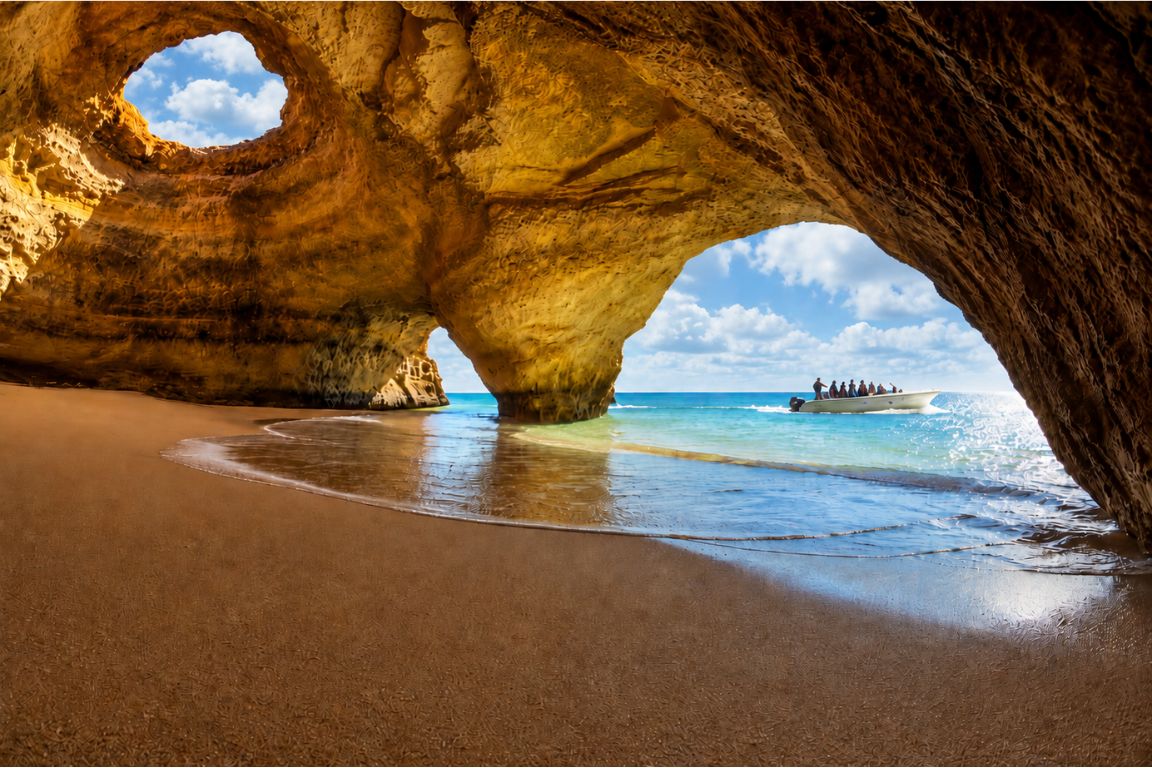
The signature experience in Lagos is a boat tour along the golden cliffs to the sea caves of Ponta da Piedade and Benagil. Nothing else shows the coast off so well. From a small boat you glide into grottoes and under arches that no clifftop path or beach can reach, which is why it tops every first-time list.
The small-group departures and coastal cruises described here are the kind Lagos Boat Tours lists from Marina de Lagos, with live prices and availability shown on each operator's booking page.
Lagos sits on the western Algarve, where the coast turns to soft, honey-coloured sandstone that the Atlantic has hollowed into caverns, tunnels and freestanding pillars. You can admire all of it from above, but the payoff is at water level. A short run out of Marina de Lagos puts you inside the rock, floating over clear green water in the cool shade of a cave, and that single hour reframes the whole town for you.
The options range from a quick, budget-friendly Ponta da Piedade grotto boat trip at a planning allowance of around $32 per adult, check the live listing, up to relaxed half-day cruises with lunch and swim stops, and private charters for a group. Even if you do only one thing here, make it this. The rest of the town, good as it is, plays a supporting role to the coast.
What are the top things to do in Lagos, honestly ranked for a first visit?
For a first visit, rank a cave boat tour first, then Ponta da Piedade on foot, the beaches, dolphin watching, the walled old town, and a sunset and day trip if time allows. This order front-loads what Lagos does better than anywhere nearby and keeps the town stops as the calmer counterweight.
It is easy to over-plan Lagos, so the honest ranking below assumes limited days and a desire to see the best of the place rather than tick every box. Nudge it to fit your own tastes, but the top three hold for almost everyone.
| Rank | Thing to do | Why it earns the spot | Rough time |
|---|---|---|---|
| 1 | Cave boat tour to Ponta da Piedade and Benagil | The one experience the region is known for worldwide | 1 to 4 hours |
| 2 | Ponta da Piedade on foot | Clifftop boardwalk and viewpoints, free and close | About 1 hour |
| 3 | The beaches | Golden coves and a long open sand beach, all nearby | Half a day or more |
| 4 | Dolphin watching | Wild pods offshore with a high sighting rate | About 1.5 hours |
| 5 | The walled old town | History, churches, markets, easy to wander | About 90 minutes |
| 6 | Sunset and a day trip | Golden-hour views, then a wider Algarve outing | An evening and a spare day |
Is Ponta da Piedade worth visiting on foot as well as by boat?
Yes. The clifftop at Ponta da Piedade is free, close to town and open at any hour, with a flat boardwalk linking viewpoints over the sea stacks and a steep staircase of around 182 steps to a sea-level landing. Seeing it from above and from the water are two different experiences, and the best days do both.
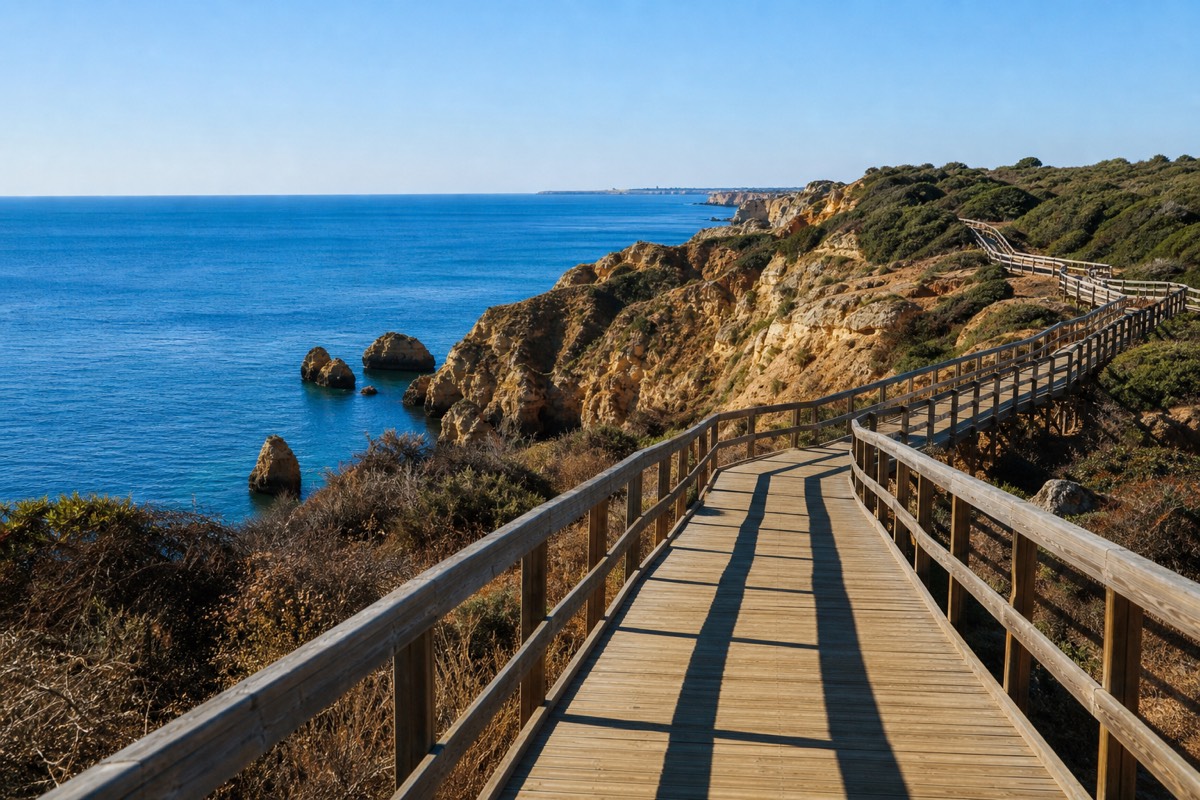
The headland sits about two and a half kilometres south of the old town, an easy thirty to forty minute walk along the cliffs or a short taxi or tuk-tuk ride. Up top, timber boardwalks carry you past the most dramatic overlooks with railings on the drop side, so you can lean out for a photo in safety. The staircase down to the water is steep and the climb back is the hard part, but standing among the pillars at sea level is worth the effort for anyone reasonably mobile.
Doing the walk in the morning and a boat or kayak run to the grottoes on the same day is the classic Lagos itinerary. If that appeals, our full guide to Ponta da Piedade covers the steps, the viewpoints, the getting-there options and the best light in detail. It is the anchor around which most first visits are built.
Which beaches should you prioritise in Lagos?
Prioritise Praia Dona Ana and Praia do Camilo for golden-cliff scenery in sheltered coves, and Meia Praia when you want space, flat sand and water sports. All three sit within about fifteen minutes of the old town. The small coves fill fast on summer mornings, so arrive early or head to the long open beach.
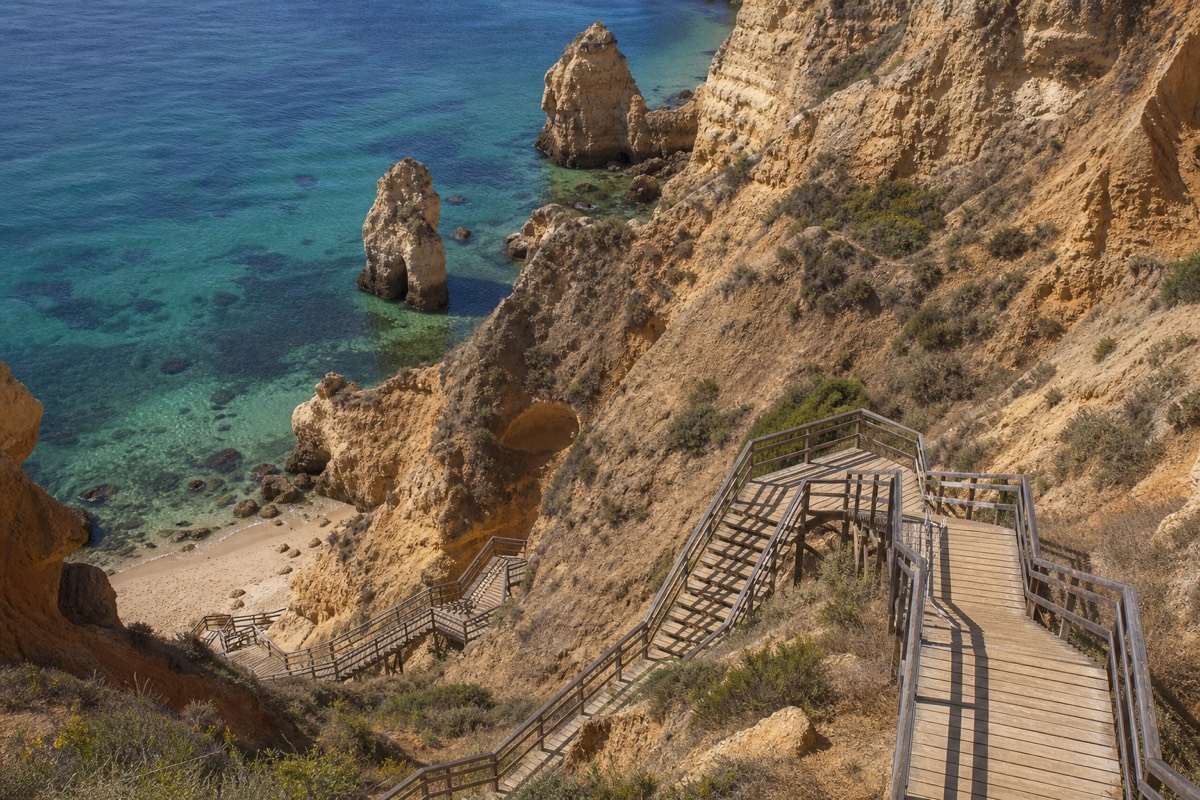
Lagos has an unusual spread of beaches for a town its size. The cove beaches immediately south of the centre, sheltered by the same cliffs that form Ponta da Piedade, hold calm, clear, warm water and dramatic rock backdrops. Praia Dona Ana is the poster beach and the best pick for families with young children, while its neighbour Praia do Camilo rewards a descent of roughly two hundred wooden steps with one of the prettiest coves on the coast.
Meia Praia is the counterpoint: a four-kilometre run of open sand east of the marina, flat, breezy and never as crammed as the small coves, which makes it the release valve when Dona Ana fills by mid-morning. For the full rundown of access, facilities and which hidden coves you can only reach by boat, see our guide to the best beaches in Lagos. The short version is that the coves are for scenery and the long beach is for space.
Is dolphin watching in Lagos worth it?
Yes, if you want wildlife rather than a landscape. Boats head offshore from the marina to find wild pods of common and bottlenose dolphins, with high sighting rates through the warmer months. A marine biologist dolphin tour adds real commentary on species and behaviour, which turns a boat ride into something you learn from.
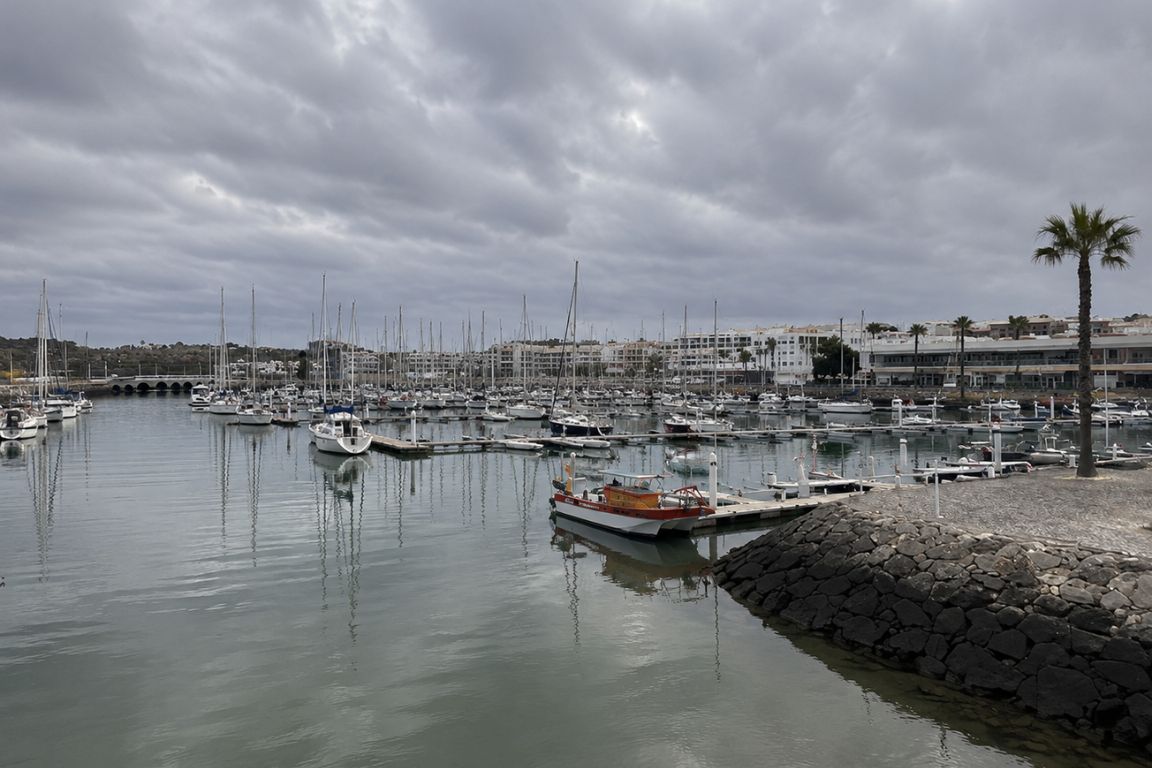
The waters off Lagos hold resident and visiting dolphins for much of the year, and the trips run out into the Atlantic to find them in their own habitat rather than in any enclosure. Speedboats and rigid inflatables get you there quickly and low to the water, so when a pod surfs the bow wave you feel like part of it. Sightings are never guaranteed with wild animals, but operators here report a high success rate in season.
The version worth paying a little more for carries a marine biologist who identifies what you are seeing and explains the behaviour, which is a planning allowance of around $47 per adult, check the live listing. Some trips combine the dolphin search with a look at the Benagil cave, giving you wildlife and geology in one outing. If you have children who love animals, this is dolphin watching in Lagos at its most rewarding.
Can you kayak or stand-up paddle the caves?
Yes, and it is one of the most memorable ways to see the coast. A guided kayak tour reaches narrow grottoes and arches that motorboats cannot enter, with a support boat alongside, while a stand-up paddle tour offers the most intimate, water-level angle on the cliffs. Both suit beginners with a short briefing and finish with a swim.
Paddling flips the usual sightseeing on its head. Instead of watching the coast slide past a rail, you steer yourself into the slots and caverns and feel the swell move under you. A guided kayak tour from Lagos typically sails out on a support catamaran, drops you into double kayaks near the cliffs, and shadows the group the whole time, so nervous first-timers stay comfortable. Reckon on around $47 per adult as a planning figure, check the live listing, with most trips running about two hours and the active paddling portion around an hour of that.
A stand-up paddle tour asks a little more of your balance but gets you closest of all to the water, gliding silently under the arches on a calm morning. It runs around $55 per adult as a planning allowance. Both options wear you out pleasantly and reward an early start, when the sea is glassy and the caves are quiet. This is the active traveller's answer to the same coast the boats show you.
What is there to do in the walled old town?
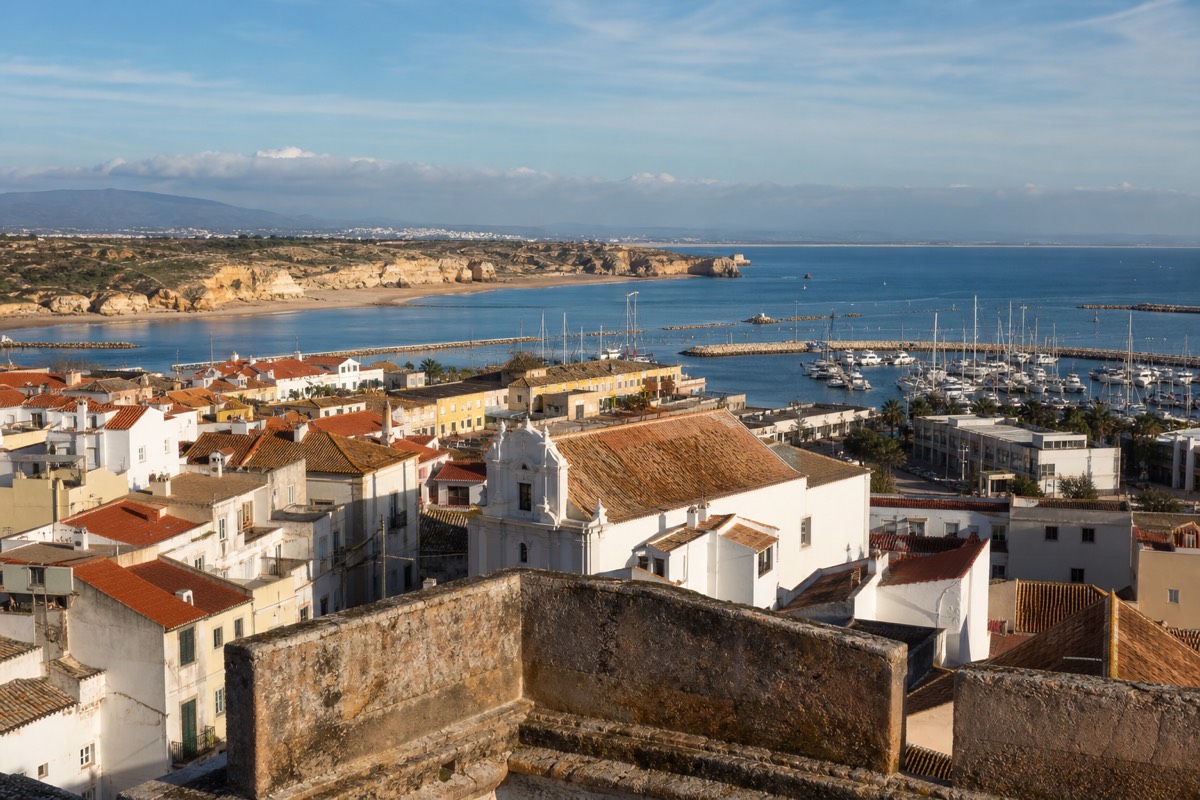
The compact old town is ringed by 16th-century walls and takes about ninety minutes to explore properly. It packs in the Municipal Market, Praca Gil Eanes, the former slave-market building, the gilded Igreja de Santo Antonio, the seafront Fortaleza da Ponta da Bandeira and the marina, all within an easy stroll of one another.
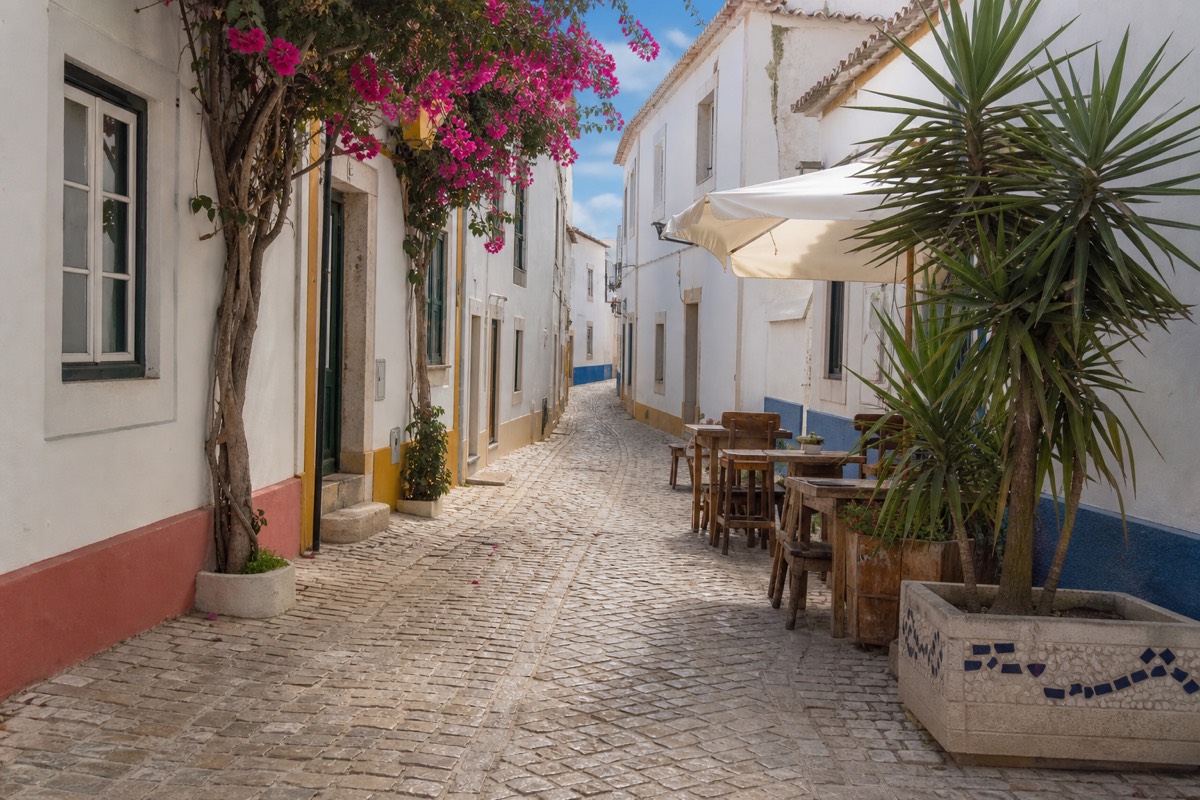
After the coast, the old town is where Lagos slows down. Its lanes are cobbled and largely pedestrian, lined with cafes, tiled facades and small shops, and the whole centre is walkable in an afternoon. The history runs deep and dark: the building on Praca do Infante served as one of the first slave markets in Europe, a sobering stop that the town does not hide. Nearby, the Igreja de Santo Antonio hides an interior of ornate gilded woodwork behind a plain front, and sits beside the municipal museum.
Down on the waterfront, the small 17th-century Fortaleza da Ponta da Bandeira guards the river mouth near the town beach, and the marina buzzes with the boats that run the cave tours. The table below turns the wander into a simple checklist.
| Landmark | What it is | Worth |
|---|---|---|
| Praca Gil Eanes | The main square with its statue of a young king | The social heart, cafes all around |
| Former slave-market building | An early European slave market, now a small exhibit | Short but historically important |
| Igreja de Santo Antonio | Plain outside, lavish gilded woodwork inside | A quiet highlight beside the museum |
| Municipal Market | Fresh fish, produce and local food upstairs | Best in the morning, good for lunch |
| Fortaleza da Ponta da Bandeira | Small seafront fort at the river mouth | Photogenic, near the town beach |
| Marina de Lagos | The departure point for the boat tours | Waterside bars, the pulse of the town |
What can you do in Lagos in the evening?
Evenings are for the golden light and a slow dinner. The Ponta da Piedade clifftop is the premier sunset spot, the marina and old-town squares fill with people over drinks and seafood, and a sunset cruise lets you watch the cliffs turn amber from the water with a glass in hand.
As the heat fades, Lagos shifts outdoors. The cliffs at the headland catch the last of the sun and glow deep gold before it drops into the Atlantic beyond the sea stacks, and the boardwalk fills with a quiet crowd waiting for the moment. Down in town, the squares around Praca Gil Eanes and the marina turn lively, with tables spilling onto the cobbles and the smell of grilled fish and fresh bread everywhere.
For something more memorable than a bar terrace, a sunset cruise trades the clifftop viewpoint for a deck on the water, sailing past the same golden coast as the light softens. Whether you take to the water or stay on land, the evening is when the town feels most like itself. The table sorts the main choices by mood.
| Evening option | Best for | Note |
|---|---|---|
| Sunset at Ponta da Piedade | Photographers and walkers | Free, arrive early for a spot at the rail |
| Sunset cruise from the marina | A special evening on the water | Book ahead, popular slots sell first |
| Dinner in the old town | Seafood and people-watching | The squares are liveliest after 8pm |
| Drinks at the marina | A relaxed waterside end to the day | Bars line the boardwalk by the boats |
What are the best day trips from Lagos?
The best day trip from Lagos depends on your appetite. Sagres and Cape St Vincent deliver Europe's wild southwest corner, Silves offers a red sandstone castle and Moorish history, and the boat run east to the Benagil cave shows off the coast's most famous grotto. All are within an easy drive or a booked tour.
Lagos makes a good base for the western Algarve, and a spare day opens up several strong outings. Southwest lies Sagres, with its stark fort on the cliffs and the lighthouse at Cape St Vincent, the most southwesterly point of mainland Europe, where the land simply ends at the ocean. Inland, the old Moorish capital of Silves crowns a hill with a russet-coloured castle and a slow riverside town beneath it.
The most popular day trip stays on the water. A run east along the coast reaches the Benagil sea cave, the domed cavern with a hole in its roof that appears on every Algarve postcard, and the classic question of is Benagil Cave worth it usually gets a yes once people see it from a boat rather than fighting the crowds on land. The table lays out the main options.
| Day trip | What you get | How to go |
|---|---|---|
| Sagres and Cape St Vincent | Wild cliffs, a clifftop fort, the end of Europe | Drive or bus, about an hour |
| Silves | Red castle, Moorish history, a quiet river town | Drive or train, under an hour |
| Benagil cave by boat | The famous domed sea cave and coastal cruise | A booked boat tour from the marina |
| Lagos coves by catamaran | A slow day of swim stops and hidden beaches | A half or full-day cruise |
How much do the main things to do in Lagos cost?
Costs in Lagos are moderate. A short grotto boat trip runs a planning allowance of around $32 per adult, dolphin and kayak trips about $47, a stand-up paddle tour around $55, and a half-day cruise with lunch near $73. The clifftop walks and most of the old town are free. Check the live listing for current pricing.
You do not need a big budget to see the best of Lagos. The headland, the beaches and the old town cost nothing beyond a coffee, and the paid experiences on the water are reasonable for what they deliver. The figures below are planning allowances only, meant to help you shape a day rather than quote a fare, and every one of them shifts with the season and the operator, so always check the live listing for current pricing before you commit.
Where the numbers climb is the private end of the scale. A whole boat to yourself for the day, drinks and a swim stop included, is priced per boat rather than per head, which suits a group splitting the cost but not a solo traveller. The table sets the common options against roughly what to budget.
| Experience | Rough cost | Time | Note |
|---|---|---|---|
| Ponta da Piedade grotto boat trip | Around $32 per adult | About 75 minutes | Best value on the water |
| Marine biologist dolphin tour | Around $47 per adult | About 1.5 hours | Wildlife plus real commentary |
| Guided kayak tour | Around $47 per adult | About 2 hours | Active, reaches narrow caves |
| Stand-up paddle tour | Around $55 per adult | About 2 hours | Closest to the water, needs balance |
| Half-day cruise with lunch | Around $73 per adult | About 3 hours | Grottoes, swim stop and a meal |
| Private full-day charter | Priced per boat, check the listing | Up to 7 hours | A whole boat for a group |
| Clifftop walks and old town | Free | Your choice | Small entry for some interiors |
What should you know before you go?
A few basics smooth out a Lagos trip. Book popular boat, kayak and sunset departures ahead in summer, since the best morning and sunset slots sell first. Most tours leave from Marina de Lagos, wild dolphin sightings are never guaranteed, and rough seas can cancel a trip, so build in a flexible spare morning.
Lagos is an easy place to visit, but a little foresight saves the small frustrations. The single most useful habit is booking the water trips in advance during peak months, because the calm early departures and the golden sunset slots are the first to fill, sometimes days or weeks ahead. Almost everything on the water starts from the marina in the town centre, an easy walk from the old town, with each operator's ticket office and meeting point listed on your confirmation.
The other thing to hold loosely is the weather. This is the open Atlantic, so an occasional blustery day churns up the sea and operators will reschedule or cancel for safety rather than push a rough crossing. Wildlife is wild, so dolphin sightings run high but carry no guarantee. The best time to visit for settled seas and thinner crowds is late spring or early autumn, though the season here runs long. Keep a spare morning in the plan and these variables become minor. The table gathers the practical points.
| Point | What to do |
|---|---|
| Booking | Reserve boat, kayak and sunset trips ahead in summer |
| Meeting point | Most tours leave from Marina de Lagos; check your confirmation |
| Weather | Rough seas can cancel; keep a flexible spare morning |
| Wildlife | Dolphin sightings are high but never guaranteed |
| Timing | Morning for calm water, late afternoon for the best light |
| What to bring | Sun protection, water, a light layer and a camera |
What can you do with kids or on a rainy day in Lagos?
With children, favour the calm cove beaches, a short grotto boat trip and a dolphin tour, all of which hold young attention with little walking. On a rare rainy day, the old-town museums, the market, the churches and a covered lunch keep everyone happy until the weather clears, which it usually does quickly.
Lagos is genuinely easy with kids. The sheltered coves have calm, warm water and golden cliffs to explore, the boat trips are short enough to hold a young attention span, and dolphins in the wild are a reliable thrill. Meia Praia adds space and water sports for older children and teenagers who want more than a bucket and spade. Some grotto boat listings accept infants and children; confirm boarding and child lifejackets, and a marine biologist dolphin tour turns a boat ride into a lesson they will remember.
Rain is uncommon here and rarely lasts, but when it comes the old town has plenty of cover. The municipal museum, the market hall, the gilded church interior and a long lunch fill a grey morning easily, and the small fort by the water is a quick, sheltered stop between showers. This is one of the reasons Lagos Boat Tours points families toward the flexible morning departures, so a passing squall can be swapped for a later slot rather than a lost day. The table matches ages and weather to the right plan.
| Situation | Best pick | Why |
|---|---|---|
| Young children, sunny | Praia Dona Ana and a short grotto boat trip | Calm water, little walking, quick boat |
| Older kids and teens | Meia Praia water sports or a kayak tour | Space, action and a swim |
| Wildlife-mad kids | Marine biologist dolphin tour | Wild pods plus real commentary |
| Rainy morning | Museum, market and church in the old town | All under cover and close together |